Zyphora
Zyphora
Zyphora
Deploy high-density computing resources certified for mission-critical enterprise tasks and large-scale cloud operations.
The international data center market is undergoing a seismic shift. As computing models transition from general-purpose CPUs to highly accelerated GPU processing systems, the physical infrastructure of modern hyperscale data centers must evolve. High-performance data centers are no longer simple server storage units; they are computational machines running multi-billion parameter AI models like DeepSeek, LLama-3, and proprietary enterprise applications.
Globally, hyperscalers and cloud service providers are demanding hardware solutions that minimize latency and optimize Power Usage Effectiveness (PUE). Driven by rapid expansion in artificial intelligence (AI), high-performance computing (HPC), and 5G operations, the necessity for robust, scalable data center hardware is higher than ever. With China acting as a major global production and engineering hub, factories in technological zones like Shenzhen are key to meeting this rising demand by manufacturing customized server components, chassis, cooling systems, and specialized motherboard setups.
Managing power requirements exceeding 40kW per rack requires advanced distribution units, solid state component durability, and power supply efficiencies surpassing Titanium grade benchmarks.
As chips reach thermal limits (TDP exceeding 350W-1000W), hybrid air-water systems, direct-to-chip (D2C) plates, and complete immersion mechanisms are replacing traditional cooling layouts.
Integrating PCIe Gen 5.0, Gen 6.0, and high-frequency storage (NVMe/CXL) demands precision PCB routing, noise reduction designs, and advanced materials.
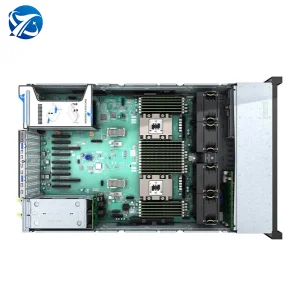
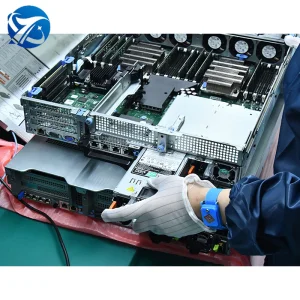
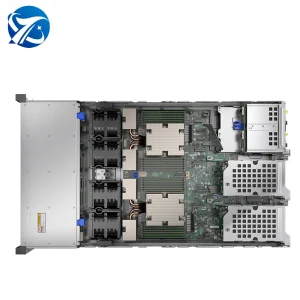
Founded in 2017, Zyphora is a professional manufacturer and global supplier of AI GPU servers, high-performance computing systems, and customized data center solutions. Headquartered in the hardware innovation center of Shenzhen, China, the company operates a modern, high-precision assembly and diagnostic facility spanning 386 square meters, specifically optimized for high-end electronic testing, customized system builds, and direct international dispatching.
Supported by a robust supply chain network of more than 1,200 qualified partners, we ensure stable sourcing, flexible production, and rapid delivery. This allows us to scale manufacturing according to client demands, handling everything from high-volume corporate server upgrades to highly specialized, custom prototype developments.
Quality is at the core of everything we do. Our products undergo comprehensive reliability testing, thermal performance evaluation, burn-in testing, and functional inspections throughout the manufacturing process. Our dedicated quality control team of 42 professionals ensures that every product meets strict international standards before shipment. Additionally, our R&D department of 86 engineers introduces more than 120 new products and upgraded solutions annually, keeping our catalog aligned with the latest technology cycles.




Understanding the shift in requirements for power, heat dissipation, and compute density.
Rather than using only general-purpose processors, modern designs combine CPUs with highly parallelized AI engines and GPUs. This approach requires server designs to accommodate high peak power draws and deliver low-latency PCIe paths directly to the processors.
Regulations worldwide are pushing for PUE values under 1.2. Meeting these targets requires efficient design at every level, including using smart Power Distribution Units (PDUs), energy-saving server fans, and eco-friendly cooling structures.
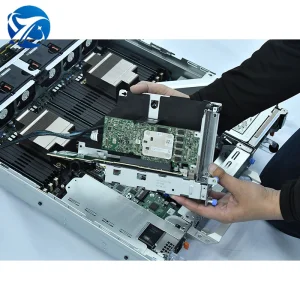
Pre-configured rack integrations (L10 and L11) are becoming the standard. Instead of installing individual servers separately, factories assemble, wire, and test entire rack systems before shipping to reduce deployment times.
Every data center deployment must balance cooling capabilities, power limits, and physical space. Below are the core scenarios we optimize for globally:
Ideal for financial institutions, large-scale retail systems, and corporate databases requiring balanced security, steady compute performance, and easy maintenance.
Designed to meet the compute needs of scientific research, genomic sequencing, and advanced oil and gas geological modeling.
Optimized for industrial facilities, telecom towers, and smart city nodes where physical space is limited and environmental conditions vary.
Maintaining high efficiency in data centers requires keeping pace with structural and thermal innovations. Our current engineering designs are built to support the following upcoming technology cycles:
Supporting higher TDP values per rack using integrated liquid-to-air cooling loops. Readying motherboard architectures to support PCIe 6.0 and future bus protocols.
Deploying Baseboard Management Controllers (BMCs) with predictive analytics to identify fan degradation, power abnormalities, and CPU throttling before they lead to hardware failures.
Designing server chassis using recycled materials and planning manufacturing steps to support easy recycling of metal and plastic parts at the end of their lifecycle.
Frequently asked technical questions answered by our engineering and logistics specialists.
Select from our complete range of high-performance servers, computing workstations, and high-density liquid-cooled architectures.