Zyphora
Zyphora
Zyphora
Founded in 2017, Zyphora is a professional manufacturer and global supplier of AI GPU servers, high-performance computing systems, and customized data center solutions. Headquartered in Shenzhen, China, the company operates a modern production facility covering 386 square meters and serves customers across North America, Europe, Southeast Asia, and the Middle East.
With annual export revenue exceeding USD 18 million, Zyphora has built a strong reputation in the AI computing infrastructure industry through continuous innovation, reliable product quality, and customer-focused service. Our team brings over 12 years of industry experience and 7 years of export expertise, enabling us to support clients worldwide with efficient project delivery and professional technical assistance.
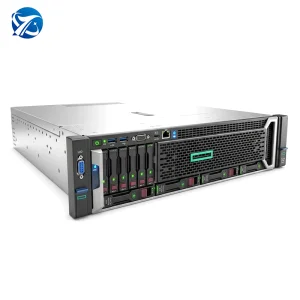
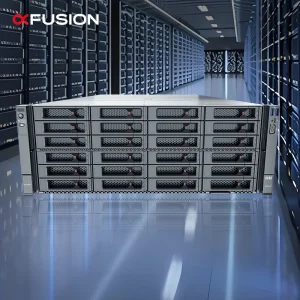
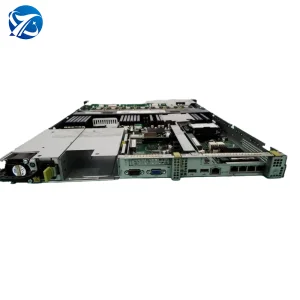
Zyphora specializes in AI GPU servers, GPU workstations, rackmount servers, storage servers, and customized computing solutions for artificial intelligence, machine learning, cloud computing, and high-performance computing applications. Supported by a robust supply chain network of more than 1,200 qualified partners, we ensure stable sourcing, flexible production, and rapid delivery.
The global computational landscape is undergoing a monumental paradigm shift. As Large Language Models (LLMs) such as DeepSeek, LLaMA, and proprietary enterprise models become central to commercial operations, the limits of cloud-only compute architectures are becoming apparent. Bandwidth latency, escalating recurring cloud service fees, and critical data privacy regulations (such as GDPR, HIPAA, and CCPA) are driving enterprises to seek on-premises hybrid alternatives. Localized high-performance AI workstations have transitioned from standard office computers to vital infrastructure nodes for private sandbox development and local deployment.
Running multi-million-parameter models on shared public cloud infrastructure exposes sensitive codebases, proprietary financial records, and medical datasets to compliance risks. Custom GPU workstations located within local server rooms ensure that training runs and fine-tuning pipelines remain entirely private.
While public cloud options present lower initial setup barriers, continuous LLM fine-tuning or generative content rendering soon results in soaring running costs. Transitioning to dedicated physical compute architectures provides companies with predictable asset management, typically yielding complete ROI within 8 to 12 months.
Zyphora's AI Workstations are built to provide deep mathematical computation capabilities directly at the user's side, whether in a university laboratory, research facility, or engineering design office. Our systems are configured specifically for workloads that require high memory bandwidth, massive CUDA/Tensor core counts, and uninterrupted thermal performance.
Developers use Zyphora systems to run Parameter-Efficient Fine-Tuning (PEFT) pipelines (such as LoRA and QLoRA) on custom open-source models, customizing large datasets for customer support agents, coding assistants, and search engines.
Our workstations support complex folding simulations (such as AlphaFold) and genomic sequencing pipelines by utilizing parallel GPU computing, accelerating drug discovery cycles and biomedical visualization.
Engineering departments process petabytes of raw camera, LiDAR, and radar sensor telemetry data, feeding deep neural networks locally to train real-time perception models and simulated driving physics.
By moving the primary model testing, debugging, and dataset pruning processes from remote servers to a localized Zyphora AI Workstation, enterprise R&D teams avoid constant upload/download latency, reduce expensive cloud egress fees, and ensure secure data operations within their physical location.
Shenzhen represents the hub of global electronics manufacturing. By operating our specialized production facilities in this industrial environment, Zyphora combines manufacturing control with strategic economic advantages, which we pass directly to our global wholesale clients.
Our direct access to a vetted pool of over 1,200 qualified component partners ensures that memory, storage modules, structural hardware, and thermal units are acquired with minimal delay. We bypass typical international supply bottlenecks, shortening delivery times for customized workstation deployments.
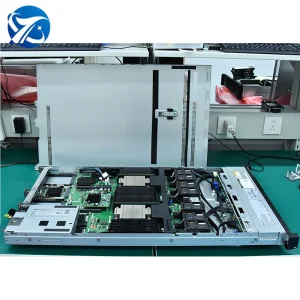
Every product undergoes exhaustive reliability validation, thermal performance evaluation, and burn-in testing before leaving the line. Our quality control division, consisting of 42 QC professionals, monitors our hardware assembly process to ensure compliance with strict international testing metrics.




Modern AI workloads demand design adaptations at the motherboard, chassis, and subsystem levels. Our R&D department, comprising 86 experienced engineers, works to keep our hardware designs aligned with future platform updates. Our technical roadmap focuses on three main developments:
As next-generation enterprise GPUs approach and exceed 500W-700W TDP, conventional air-cooling systems require high fan speeds, resulting in noise and reduced efficiency. Zyphora is expanding its hybrid liquid-cooling technology, bringing low-noise direct-to-chip (D2C) liquid cold plates into desktop form factors, keeping operational noise under 45dB even under full computational loads.
Bandwidth between memory pools and GPU clusters is a common performance bottleneck. Zyphora's future motherboards integrate PCIe Gen 6.0 host interfaces and Compute Express Link (CXL) architectures, increasing data throughput rates, reducing memory access latencies, and enabling larger model layers to reside in unified physical memory space.
We are refining modular chassis architectures to allow quick swaps between multi-GPU node frames, high-density hot-swap SAS/SATA RAID storage units, and diverse power supplies. This allows our wholesale partners to configure servers for varying compute tasks with minimal re-tooling costs.
Distributing high-performance hardware across international borders requires strict compliance and logistics management. Zyphora relies on seven years of export experience to manage international trade processes, ensuring that hardware consignments arrive safely and compliant with local standards.
Our manufacturing and assembly lines conform to global standards including CE, FCC, RoHS, and CCC. We provide comprehensive safety documentation and electrical certifications required by destination customs authorities in Europe, the Americas, and the Middle East.
We configure hardware at the factory level with secure UEFI, TPM 2.0 security modules, and clean operating system installations (Ubuntu LTS, Rocky Linux, or Windows Server). This ensures that workstations integrate directly into corporate security structures right out of the box.