Zyphora Zyphora

Top NVIDIA GPU Server Manufacturers for Global Buyers

Time:2026-11-14 Author:Isabella
0%

Choosing a nvidia gpu server manufacturer is no longer just a matter of comparing GPU counts. Buyers must weigh workload fit, cooling, networking, service coverage, and the time required to deploy a complete system. The stakes are substantial. NVIDIA reported Data Center revenue of $115.2 billion for fiscal 2025, up 142% year over year, in its annual filing. That figure reflects fast-growing demand, but it does not mean every GPU server suits every organization.

Market data offers useful context. IDC’s Worldwide Quarterly Server Tracker reported that global server revenue reached $77.3 billion in the fourth quarter of 2024, a 91.3% increase from a year earlier. These figures point to a rapidly expanding market. They also make careful evaluation more important: product names can sound similar, while memory capacity, GPU interconnects, power requirements, and support terms differ. A rack may look ready in a sales photo. In practice, facility power and cooling can change the project.

This guide compares manufacturers through practical questions: Which workloads does each platform serve? What configurations can buyers order? How accessible are integration, testing, and regional support? Public specifications and company disclosures help, but they do not replace validation against a buyer’s own workload. No ranking is perfect. Some details change quickly, and published performance claims may not match every deployment. Global buyers should confirm current availability, warranty coverage, and service response times directly with vendors before making a decision.
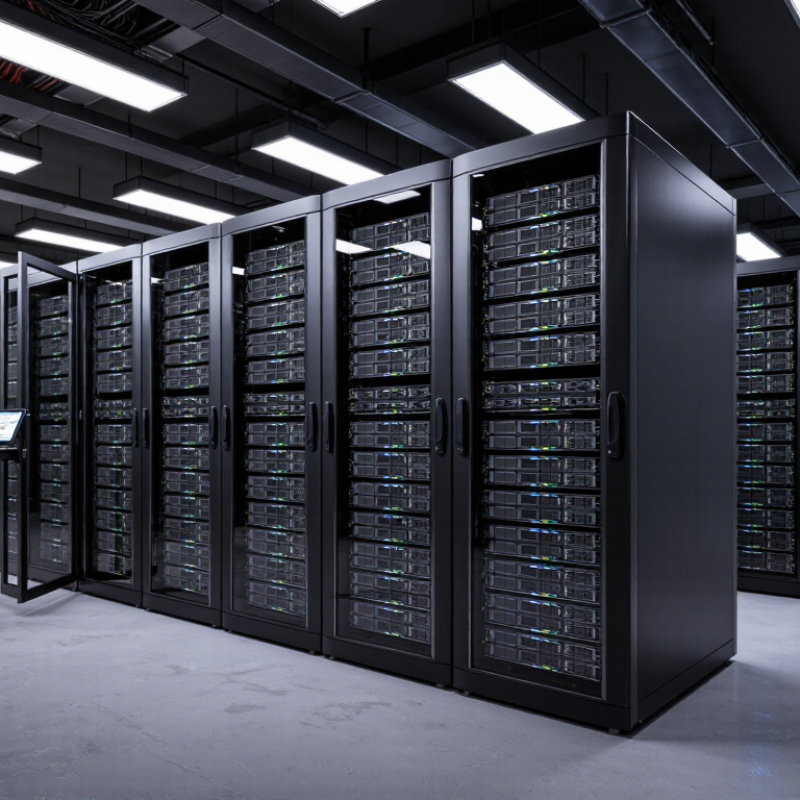
Top NVIDIA GPU Server Manufacturers for Global Buyers

What Defines an NVIDIA GPU Server and Its Role in AI Infrastructure

An NVIDIA GPU server is a computer system built to run parallel workloads across graphics processing units. It combines accelerators with host CPUs, high-bandwidth memory, fast networking, and storage. In multi-GPU systems, the interconnect lets processors exchange data quickly, which matters for training large models. A server may also sit within a larger rack-scale cluster. Cooling matters. So does power delivery.

These systems form a core layer of AI infrastructure, supporting model training, scientific computing, and real-time inference. Stanford’s 2024 AI Index reports that training compute for notable AI models has doubled roughly every five months. That pace puts pressure on server design and data-center capacity. The International Energy Agency’s Electricity 2024 report estimates data-center electricity use at about 460 terawatt-hours in 2022, with demand potentially exceeding 1,000 terawatt-hours by 2026. More GPUs help, but they do not guarantee better results. Memory limits, network bottlenecks, and cooling constraints can leave expensive hardware underused. A specification sheet can still hide a poor fit; buyers should match server configuration to workload, facility power, and cooling capability.

How Eight-GPU Systems Use 1,440 GB of HBM3e Memory

An eight-GPU server with 1,440 GB of HBM3e memory provides 180 GB per accelerator. That large pool can hold substantial model weights, intermediate activations, and portions of training data close to the processors. Keeping data on-package can reduce trips to system memory, which matters when several GPUs exchange tensors repeatedly. The number is impressive. It is not the whole story.

Usable capacity depends on the actual accelerator configuration and software allocation. Some memory is reserved for runtime tasks, and parallel workloads may divide capacity unevenly. Bandwidth, interconnect speed, cooling, and power delivery also shape real performance. A system can list 1,440 GB and still slow down if communication or heat becomes the bottleneck. I would verify the per-GPU memory specification and workload benchmarks before comparing servers; published totals can make configurations look more alike than they are.

Tips: Ask for memory capacity per GPU, not only the combined total. Check sustained performance under a full-load test, and confirm how the system handles memory errors and thermal limits. A practical detail: leave room for growth. The ideal allocation may be less tidy than the datasheet suggests.

Eight-GPU Systems: Up to 1,440 GB of HBM3e Memory

Illustrative aggregate memory capacity, assuming 180 GB of HBM3e per GPU.

Total capacity scales linearly with GPU count: eight GPUs at 180 GB each provide 1,440 GB of aggregate HBM3e memory. Actual system configurations may vary.

Which Global Manufacturers Build NVIDIA-Powered GPU Servers

Global manufacturers of GPU servers generally fall into three groups: enterprise system makers, contract design-and-build firms, and regional integration specialists. Enterprise manufacturers offer validated configurations for data centers, with tested power supplies, cooling, firmware, and support plans. Contract manufacturers often build systems to a buyer’s specification, while regional integrators can tailor racks and networking for local facilities. Some of these manufacturers design servers around NVIDIA accelerator platforms, but availability and configuration vary by model and market.

The chassis matters. Dense GPU systems can draw substantial power and push hot air through tightly packed components, so buyers should check cooling design, rack depth, and facility capacity before ordering. Ask manufacturers for accelerator compatibility, memory configuration, interconnect options, software validation, and replacement-part coverage. Request test results for the intended workload, not just a peak-performance figure. It depends. A configuration that works well for model training may be poorly matched to inference or simulation. One detail is easy to miss: support response times can differ between a global manufacturer and its local service partner. Verify the actual service arrangement, and confirm that the quoted system can be maintained in the country where it will run.

How Server Designs Differ in Cooling, Networking, and Power Delivery

GPU server designs differ most visibly in how they move heat, data, and electrical power. Air-cooled systems use fans and carefully directed airflow, but dense racks can leave hot spots near the rear doors. Liquid cooling places cold plates close to processors, reducing reliance on room airflow; it also adds pumps, manifolds, and leak checks. Uptime Institute’s 2024 Global Data Center Survey reported an average facility PUE of 1.58 for 2023. That figure is useful, but it does not predict how a particular high-density rack will perform. Small details matter.

Networking choices shape both speed and layout. High-bandwidth accelerators need fast links between servers, so buyers should compare switch capacity, cable paths, and latency—not port count alone. Copper cables can suit short connections; optical links help span longer distances, but add components and power use. Power delivery deserves equal attention. A rack drawing several dozen kilowatts needs suitable busways, power shelves, and backup capacity, with room for peak demand. The International Energy Agency estimated data centers used 240–340 TWh globally in 2022, around 1–1.3% of electricity consumption. Check the assumed workload and measurement boundary. Specs can flatter a design. Real operating data is better, though sometimes incomplete.

Top NVIDIA GPU Server Manufacturers for Global Buyers - How Server Designs Differ in Cooling, Networking, and Power Delivery

Server Design Profile Typical GPU Configuration Cooling Design Networking Options Power Delivery Best-Fit Use Cases Key Facility Consideration
Air-cooled PCIe system Multiple PCIe accelerator cards in a standard rack server; exact GPU count depends on chassis, card size, and power budget. High-speed chassis fans move air through the server. Component layout and unobstructed front-to-back airflow are important. Commonly configured with high-speed Ethernet or InfiniBand adapters. Link speed and adapter count depend on the workload and system configuration. Redundant server power supplies are common. Required input capacity depends on the CPUs, accelerators, memory, and installed peripherals. Inference, visualization, development, and smaller-scale AI or accelerated-computing deployments. Confirm rack airflow, inlet temperature, available electrical capacity, and the facility’s ability to remove the heat generated.
High-density GPU platform Designed to host several accelerators in one system, often with high-bandwidth GPU-to-GPU interconnects where supported by the platform. May use optimized air cooling or direct liquid cooling, depending on accelerator thermal design and system configuration. High-speed fabric adapters can support distributed training and data-intensive workloads. Network topology and oversubscription affect cluster performance. Requires careful sizing of redundant power supplies, rack circuits, and distribution equipment; actual demand varies by configuration and workload. Large-model training, high-performance computing, and multi-GPU workloads that benefit from fast communication among accelerators. Check rack-level power capacity and cooling plans before deployment; a single dense system can place substantial demands on both.
Direct-liquid-cooled platform Can support high accelerator density when the server and facility cooling infrastructure are designed for liquid cooling. Cold plates transfer heat from selected components to circulating coolant. A facility water loop or coolant distribution unit may be required. Uses the same range of network fabrics as other GPU systems; liquid cooling does not itself determine network speed or topology. Electrical requirements remain configuration-specific. Power distribution must be planned alongside pumps, coolant equipment, and server loads. Deployments with high rack density or limited room for air-based heat removal. Verify coolant temperature, flow, water quality, connections, leak-management procedures, and compatibility with facility infrastructure.
Modular cluster-ready system Servers are deployed as repeatable nodes, with accelerator count and storage options selected for the cluster design. Usually air-cooled or liquid-cooled according to node density and data-center design; consistent airflow or coolant routing simplifies scaling. Designed for integration into a cluster fabric. Ethernet or InfiniBand can be selected according to application, software stack, and performance needs. Rack power distribution may use redundant feeds and monitored power distribution units. Circuit design should account for concurrent node load. Expandable AI clusters, research computing, and shared infrastructure serving multiple teams. Plan networking, cabling, power, cooling, and management as a rack-level system rather than evaluating each node in isolation.

Note: These are general server-design profiles, not specifications for individual manufacturers or products. GPU count, supported interconnects, network speeds, cooling requirements, and power draw vary by system configuration, component generation, and workload. Confirm final requirements with the system documentation and data-center operator.

How Buyers Compare GPU Capacity, Support, and Regional Availability

Global buyers should compare usable GPU capacity, not headline accelerator counts. A 16-accelerator server can still disappoint when memory, interconnect bandwidth, or cooling limits the workload. Ask suppliers for sustained performance on your target models, memory per accelerator, rack power, and tested cluster scale. Small details matter.

Support matters just as much. Check response times, local engineers, replacement-part stock, and who handles firmware and cluster diagnostics. Uptime Institute’s 2024 Annual Outage Analysis found that 54% of respondents said their most recent significant outage cost more than $100,000. Delayed parts can turn a small fault into costly downtime. The International Energy Agency’s Electricity 2024 report estimated data centres used about 460 TWh globally in 2022, with demand potentially exceeding 1,000 TWh by 2026. That makes regional power and cooling checks practical, not administrative. Confirm delivery lead times, local service coverage, and site requirements before comparing quotes. A server available nearby may be easier to support, but availability alone does not prove it fits your workload.

FAQS

What is a GPU server?

It combines processors, accelerator cards, memory, networking, and storage. It handles many calculations in parallel.

What workloads use GPU servers?

They support model training, scientific computing, and real-time inference. The best setup depends on the workload.

Do more GPUs always improve performance?

No. Limited memory, slow networking, or poor cooling can leave accelerators underused. More hardware is not always better.

What should buyers check before choosing a server?

Match its configuration to the workload, facility power, and cooling capacity. A specification sheet may not show the full picture.

How do air and liquid cooling differ?

Air cooling uses fans and directed airflow. Liquid cooling brings cold plates close to processors, but adds pumps and leak checks.

What networking details matter in a GPU cluster?

Compare bandwidth, latency, switch capacity, and cable routes. Port count alone can be misleading.

How much power can a dense rack need?

Some racks draw several dozen kilowatts. Check power shelves, backup capacity, and room for peak demand.

What should buyers ask about support?

Confirm replacement-part coverage and response times. Check who provides local service. Details can be easy to miss.

How can buyers judge real-world performance?

Request test results for the intended workload, not just peak figures. Real operating data helps, though it may be incomplete.

Conclusion

An NVIDIA GPU server is a purpose-built system that combines high-performance accelerators, fast memory, and supporting components to handle demanding AI training and inference workloads. In an eight-GPU configuration, up to 1,440 GB of HBM3e memory can provide substantial capacity for large models and data-intensive tasks. These systems serve as key building blocks in AI infrastructure, where compute density, data movement, and reliable operation all matter.

Choosing a nvidia gpu server manufacturer involves comparing more than accelerator capacity. Server designs can differ in air or liquid cooling, high-speed networking options, and power delivery suited to sustained workloads. Buyers should also consider system expandability, technical support, warranty coverage, and regional availability. Evaluating these factors against workload requirements and deployment conditions helps organizations select a configuration that balances performance, operational needs, and long-term support.

Isabella

Isabella

Isabella is a dedicated marketing professional with a sharp focus on driving brand growth and engagement through strategic content creation. With an extensive background in digital marketing, she combines her passion for storytelling with her keen understanding of industry trends to deliver......