Zyphora
China’s data center industry has become a major force in global artificial intelligence infrastructure. Its leading manufacturers supply GPU servers, liquid-cooling systems, storage platforms, and integrated rack solutions for demanding workloads. A reliable data center ai server manufacturer must offer more than powerful processors. It should demonstrate engineering experience, stable production, transparent testing, and dependable technical support.
This overview examines prominent Chinese manufacturers through practical criteria. These include GPU compatibility, thermal performance, energy efficiency, firmware quality, supply capacity, and after-sales service. Some facilities now operate high-density racks that generate intense heat within a confined space. Direct-to-chip cooling, intelligent power distribution, and real-time monitoring therefore matter greatly. Service response also matters. A delayed replacement can interrupt model training, cloud operations, or scientific research.
Market reputation alone is insufficient. Buyers should verify certifications, deployment records, warranty conditions, and long-term component availability. Vendor claims may sound impressive, yet independent validation remains essential. Pricing can also hide maintenance costs, software limitations, or regional support gaps. This is where comparisons become useful, though no ranking can fit every deployment. A research laboratory may prioritize accelerator flexibility, while a hyperscale operator may value standardization and supply continuity.
The manufacturers discussed here reflect China’s growing technical capability and industrial depth. However, the market is not flawless. Some specifications remain difficult to compare across vendors. Documentation may also vary in quality. Careful evaluation is still required. The strongest choices balance performance, reliability, compliance, and measurable operating value.
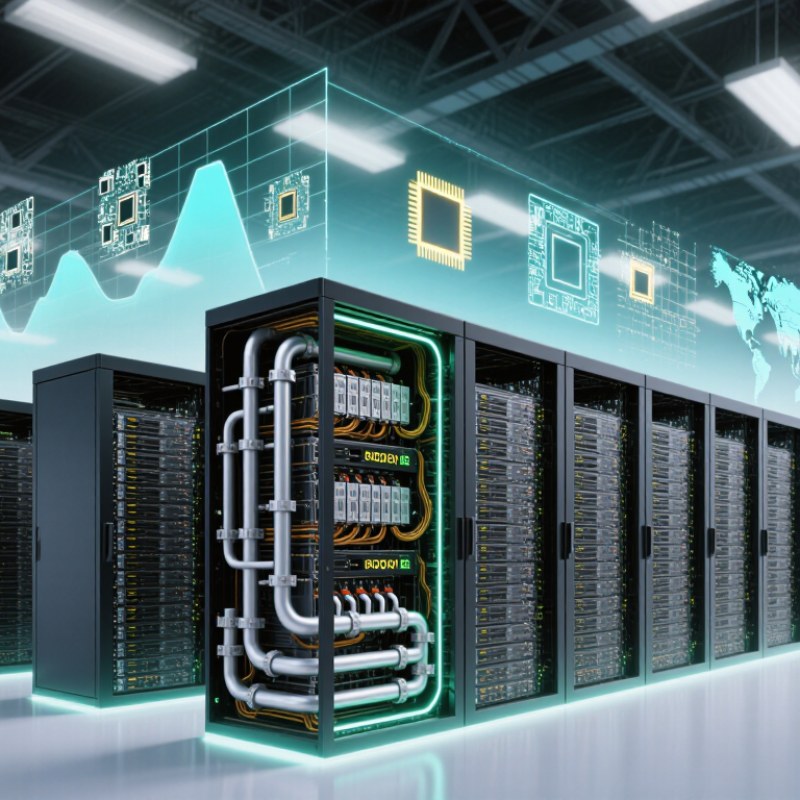
An AI server is a specialized computing system built to train, fine-tune, and run artificial intelligence models. Unlike a standard enterprise server, it combines high-performance processors, accelerator cards, fast memory, and high-speed networking. These components move large datasets quickly and support parallel calculations. In China’s data center industry, AI servers form the hardware foundation for language models, industrial inspection, medical imaging, and intelligent transportation.
Their role extends beyond raw computing power. A rack of AI servers may process video streams from factories, while another cluster trains a model overnight. High-bandwidth connections reduce delays between servers. Liquid cooling can control heat more efficiently in dense racks. Power monitoring is equally important, because one overloaded cabinet can affect nearby equipment. Experienced data center teams also check firmware, airflow, backup power, and model workloads before expansion.
Chinese manufacturers are developing systems for different budgets, industries, and deployment sizes. Some focus on large training clusters. Others produce compact servers for private data centers and edge locations. However, performance claims deserve careful testing. Real results depend on software efficiency, data quality, cooling design, and utilization rates. A powerful server may still waste resources when poorly scheduled. This remains an uncomfortable gap between specification sheets and daily operation. The industry is advancing, but practical reliability still requires measured deployment, regular maintenance, and honest performance comparisons.
China’s AI server manufacturers are investing heavily in accelerator-based architectures. These systems combine multiple GPUs or specialized AI chips with high-bandwidth memory. The design supports large language model training and real-time inference. Memory bandwidth often matters more than raw processor speed. A server may contain several accelerator cards, connected through high-speed links that reduce data movement delays.
Thermal engineering is equally important. Dense racks can produce intense heat near the accelerator trays. Many manufacturers now use direct-to-chip liquid cooling, cold plates, and rear-door heat exchangers. These methods keep processing units stable during long training runs. Some facilities also use intelligent power management, which adjusts server consumption during lighter workloads. Small improvements can reduce operating costs across thousands of machines.
The software layer connects hardware performance with practical results. Distributed training platforms divide workloads across servers and monitor communication failures. Containerized environments help engineers move models between testing and production. Security modules can protect access credentials and training data inside private facilities. Reliability testing may include memory checks, fan failure simulations, and repeated workload trials. Yet the picture is not flawless. Liquid cooling adds maintenance demands, while complex accelerator clusters can be difficult to diagnose. Engineers still need clearer energy measurements and better compatibility between different computing platforms. That gap deserves more attention.
| Technology Area | Core Technology Used | Typical Technical Implementation | Primary AI Workload | Key Benefits | Technology Maturity |
|---|---|---|---|---|---|
| Heterogeneous Computing | CPU, GPU, and dedicated AI accelerator integration | Server platforms combine general-purpose processors with parallel accelerators and specialized matrix-computing units through high-bandwidth host interfaces. | Large-model training, inference, image recognition, recommendation, and scientific computing | Improves parallel performance and allows workloads to be assigned to the most suitable processor. | Widely deployed |
| Accelerator Interconnect | High-speed peer-to-peer accelerator communication | Uses dedicated accelerator links or high-bandwidth fabric connections to reduce data-transfer bottlenecks between multiple accelerator cards. | Distributed training and high-throughput inference | Reduces communication latency and improves scaling efficiency across multiple accelerators. | Widely deployed in high-end systems |
| Host Expansion | PCI Express 5.0 and emerging PCI Express 6.0 support | Provides high-speed connections between processors, accelerators, network adapters, storage devices, and expansion modules. | General AI servers, inference clusters, and data-intensive analytics | Increases peripheral bandwidth and supports current and next-generation accelerator cards. | PCI Express 5.0 is mature; PCI Express 6.0 is emerging |
| Memory Subsystem | DDR5 system memory and high-bandwidth accelerator memory | Uses DDR5 memory for host processing and high-bandwidth memory on selected accelerators for rapid access to model parameters and intermediate data. | Large language models, recommendation systems, and computer vision | Increases memory bandwidth and helps reduce data movement during model execution. | Widely deployed |
| Memory Expansion | Compute Express Link memory pooling and expansion | Provides cache-coherent access between processors, accelerators, and compatible memory devices through supported expansion interfaces. | Memory-intensive inference and large-model serving | Improves memory utilization and can increase addressable memory capacity. | Growing adoption |
| Network Fabric | High-speed Ethernet with RDMA capabilities | Uses low-latency network adapters and remote direct memory access to transfer data between servers with limited processor involvement. | Multi-node model training, parameter synchronization, and distributed inference | Reduces communication overhead and supports scalable cluster design. | Widely deployed |
| Network Bandwidth | 200 Gb/s, 400 Gb/s, and emerging 800 Gb/s data-center links | High-bandwidth links connect AI servers, switch fabrics, storage systems, and cluster management networks. | Large-scale training and high-concurrency inference | Supports faster synchronization of model parameters and training data. | 200 Gb/s and 400 Gb/s are established; 800 Gb/s is emerging |
| Thermal Management | Direct-to-chip liquid cooling | Coolant flows through cold plates attached to high-power processors and accelerators, while supporting components may continue to use air cooling. | High-density AI clusters and sustained model training | Improves heat removal, reduces fan power, and supports higher rack-level compute density. | Commercially available and expanding |
| Rack-Level Cooling | Rear-door heat exchangers and immersion cooling | Rear-door systems remove heat from server exhaust, while immersion systems place selected components or complete systems in dielectric coolant. | High-density data centers with restricted air-cooling capacity | Enables higher thermal design power and can reduce dependence on room-level air conditioning. | Rear-door systems are mature; immersion cooling is specialized |
| AI Storage | NVMe solid-state storage and parallel file systems | Combines low-latency flash storage with distributed file systems designed for concurrent access by multiple training nodes. | Training-data loading, checkpoint storage, and model serving | Reduces input-data delays and improves checkpoint and dataset throughput. | Widely deployed |
| Cluster Management | Container orchestration and accelerator scheduling | Uses cluster software to allocate processors, accelerators, memory, storage, and network resources across AI jobs. | Shared AI platforms, cloud services, and enterprise data centers | Improves resource utilization, workload isolation, and operational flexibility. | Widely deployed |
| Model Optimization | Mixed-precision computing, quantization, and sparsity | Uses lower numerical precision, optimized kernels, and structured or unstructured sparsity where supported by the model and accelerator. | Large-model training and inference optimization | Reduces memory consumption and energy use while increasing throughput when accuracy requirements permit. | Widely deployed, workload dependent |
| Reliability | ECC memory, component monitoring, and fault diagnostics | Error-correcting memory, thermal sensors, power monitoring, and predictive maintenance tools detect or correct selected hardware faults. | Enterprise AI, financial services, scientific computing, and continuous inference | Improves data integrity, system availability, and maintenance efficiency. | Widely deployed |
| Management and Security | Out-of-band management, secure boot, and hardware root of trust | Dedicated management controllers support remote monitoring, firmware control, secure boot verification, and access authentication. | Enterprise and public-sector AI infrastructure | Strengthens lifecycle management, firmware security, and remote operational control. | Widely deployed |
| Power Efficiency | Dynamic power management and high-efficiency power supplies | Power supplies, processors, accelerators, and cooling systems adjust operating levels according to workload demand. | 24/7 AI inference and large-scale training clusters | Reduces operating expenditure and helps data centers manage power and cooling constraints. | Widely deployed |
Leading Chinese manufacturers of data center AI servers are shifting from basic assembly toward system-level engineering. Their work now covers accelerator integration, high-speed networking, storage, firmware, and thermal control. TrendForce reported that AI server shipments could grow by about 37% in 2024, representing roughly 12% of global server shipments. This demand is pushing Chinese suppliers to shorten validation cycles and improve local supply coordination.
In practice, buyers examine more than computing speed. A dense rack may require liquid cooling, redundant power modules, and carefully balanced airflow. The International Energy Agency reported that data centers consumed about 415 terawatt-hours of electricity worldwide in 2024. It also expects electricity demand from data centers to nearly double by 2030. Chinese manufacturers are responding with direct-liquid-cooling designs, modular racks, and software that monitors power usage per workload. These details matter in crowded facilities.
Published comparisons remain imperfect. Some product sheets emphasize peak performance but omit sustained throughput, noise levels, or service response times. That gap deserves scrutiny. Procurement teams should request independent benchmark records, thermal test conditions, and failure-rate data. They should also verify compatibility with domestic operating systems, network fabrics, and common AI frameworks. Manufacturing depth is useful, but field experience reveals more. A server that performs well for ten minutes may behave differently after weeks of continuous training. Reliable suppliers therefore document testing methods, maintenance intervals, and replacement procedures with unusual precision.
Top China Data Center AI Server Manufacturers
AI server manufacturers in China commonly develop several product types for different computing workloads. Rack-mounted GPU servers support model training, scientific simulation, and large-scale image analysis. They often combine multiple accelerators, high-speed networking, and substantial memory. A two-unit rack server may fit a standard data center cabinet while handling demanding parallel workloads.
Inference servers serve trained models with lower latency and steadier power use. They suit online translation, medical image review, recommendation systems, and intelligent customer service. Some systems use CPUs with smaller accelerators for cost-sensitive applications. Others rely on high-density GPU platforms when thousands of requests arrive each second. Response time matters here.
Storage-heavy AI servers support data preparation, video indexing, and archive processing. They may include fast solid-state drives beside high-capacity disks. This arrangement helps teams move large datasets without keeping every file on premium storage. For factories and ports, edge AI servers bring local inference closer to cameras and sensors. Shorter network paths can reduce delays, especially when connections are unstable.
Cooling design also changes by product type. Air-cooled systems remain practical for moderate workloads and simpler maintenance. Liquid-cooled platforms can manage higher rack density, but they require careful plumbing and trained technicians. In real deployments, power capacity, noise, floor loading, and replacement access often matter as much as benchmark scores. A server may perform impressively in testing yet disappoint after months of dust, heat, and uneven utilization. Manufacturers therefore need reliable monitoring, clear service procedures, and workload-based validation before installation.
Top China Data Center AI Server Manufacturers
China’s AI server sector is moving from pilot projects to sustained production workloads. IDC’s China Artificial Intelligence Infrastructure Market Tracker reported strong year-on-year growth in 2023, driven by large-model training, inference, and public-sector computing demand. TrendForce also expects AI server shipments to keep expanding as data centers adopt accelerated computing. These figures show momentum, not guaranteed returns. Demand can change quickly.
Selection should begin with workload evidence. Training clusters need high-speed interconnects, dense accelerator support, and stable thermal control. Inference sites may value lower latency, power efficiency, and flexible expansion. Gartner estimates that worldwide AI server spending will reach hundreds of billions of dollars this decade, but infrastructure costs remain uneven across regions. Buyers should compare performance per watt, not only purchase price.
Check rack power, cooling capacity, firmware maturity, and local service response. Ask for measured results using your own models. Vendor claims can look polished. Reality is messier. Reliability testing should include sustained loads, memory pressure, network failures, and recovery time. The Uptime Institute’s data-center research repeatedly identifies power, cooling, and operational resilience as major availability concerns. China-based buyers should also examine supply continuity, spare-parts access, software compatibility, and compliance documentation. A cheaper server may become expensive when engineers spend nights tuning it. Small pilot deployments are wiser than immediate fleet-wide commitments.
Rack-mounted GPU servers support model training, scientific simulation, and large-scale image analysis. They often combine accelerators, fast networking, and large memory. Inference servers prioritize quick responses. Storage-heavy systems prepare datasets and index video. Edge servers process camera and sensor data locally.
It suits demanding parallel workloads with many calculations running together. A two-unit rack server can fit a standard cabinet. It may support training clusters and complex simulations. Check power and cooling first. Benchmark results alone are not enough.
Inference servers deliver trained models with lower latency and steadier power use. They can support translation, image review, recommendations, and customer-service tools. Smaller accelerators may reduce costs. High-density platforms suit heavy request volumes. Response time matters most.
Edge servers place inference near cameras, sensors, factories, or ports. Shorter network paths can reduce delays. They are useful when connections are unstable. A camera feed may be analyzed beside the production line. Less distance helps.
Air cooling is practical for moderate workloads and simpler maintenance. Liquid cooling supports higher rack density. It requires careful plumbing and trained technicians. Noise, floor loading, and replacement access also matter. The installation may look excellent on paper, then struggle in summer heat.
Compare performance per watt, cooling capacity, firmware maturity, and service response. Also check spare-parts access and software compatibility. A cheaper server can create expensive engineering work later. Night-time troubleshooting is not free. The lowest price may mislead.
Start with a small pilot using your own models and real workloads. Measure sustained performance, power use, memory pressure, and recovery time. Test network failures too. Record results over several weeks. Short tests can hide weaknesses.
No. Industry demand is growing, but demand can change quickly. Training, inference, and public-sector workloads are expanding. That momentum does not guarantee returns. Regional infrastructure costs remain uneven. Be cautious.
China’s data center AI server industry is becoming a critical foundation for intelligent computing, supporting applications such as cloud services, advanced analytics, scientific research, smart manufacturing, and large-scale model training. A data center ai server manufacturer typically develops high-performance systems that combine advanced processors, accelerators, high-speed memory, efficient networking, intelligent cooling, and reliable power management. These technologies help improve computing efficiency, reduce operating costs, and support the rapid processing of complex workloads.
Chinese manufacturers offer various AI server types, including general-purpose servers, accelerated computing platforms, edge servers, and specialized systems for training or inference. Their products serve different scenarios, from centralized data centers to enterprise facilities and distributed edge environments. As demand continues to grow, major market trends include energy efficiency, modular architecture, liquid cooling, domestic supply-chain development, and stronger software-hardware integration. When selecting an AI server, organizations should evaluate computing performance, scalability, compatibility, reliability, maintenance support, total cost of ownership, and suitability for specific workloads.
