Zyphora Zyphora

Who Are the Top AI Training Server Manufacturers?

Time:2026-10-18 Author:Madeline
0%

Who Are the Top AI Training Server Manufacturers?

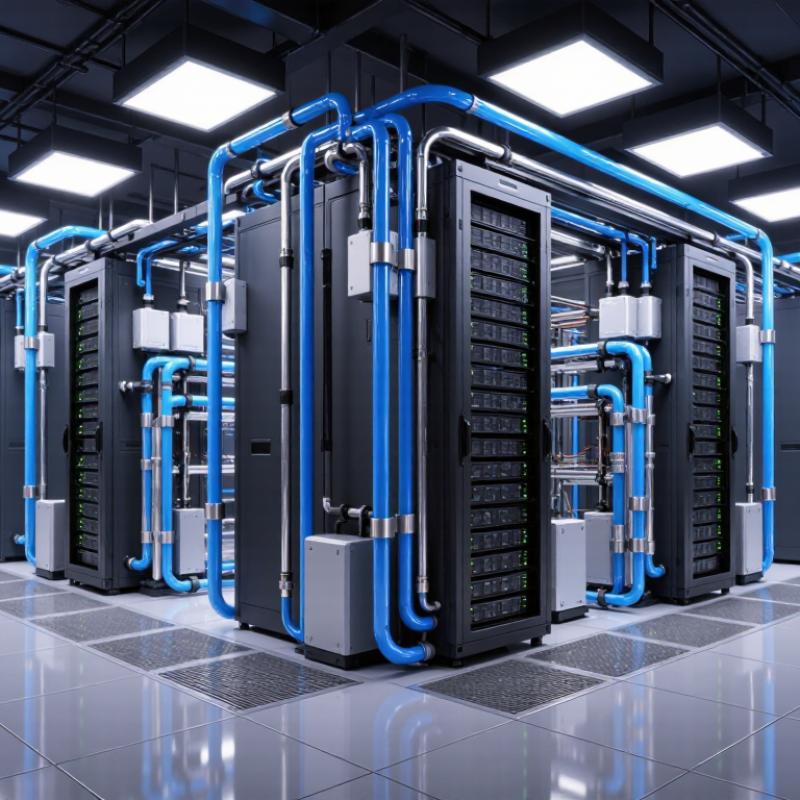
The market for AI training servers is changing faster than many procurement teams can update their specifications. A reliable ai training server manufacturer must deliver more than powerful GPUs. It must also provide stable cooling, high-speed networking, efficient power delivery, tested firmware, and responsive technical support. In a modern data center, a server rack may contain liquid-cooling lines, thousands of accelerator connections, and complex monitoring systems. Small design choices can affect training speed, energy use, and long-term reliability.

Jensen Huang, NVIDIA’s founder and CEO, has described this shift clearly: “AI factories are the factories of the future.” His statement reflects a broader industry reality. Companies such as Supermicro, Dell Technologies, Hewlett Packard Enterprise, Lenovo, and NVIDIA-backed system providers compete through different strengths. Some focus on customizable platforms. Others emphasize global service, integrated infrastructure, or specialized accelerator systems. The strongest choice depends on workload, budget, deployment location, and operational expertise.

This guide examines leading manufacturers through practical criteria. These include GPU compatibility, memory capacity, interconnect performance, thermal design, security controls, warranty coverage, and total ownership cost. Vendor reputation matters, but it should not replace hands-on validation. A system that performs well in a demonstration may behave differently under continuous training loads. That assumption can fail.

No ranking remains permanent. New chips, cooling methods, and regional supply conditions can quickly change the competitive landscape. Readers should treat this overview as a decision framework, not an absolute verdict. Careful testing still matters most.
Who Are the Top AI Training Server Manufacturers?

What Defines an AI Training Server Manufacturer?

An AI training server manufacturer does more than assemble racks with powerful processors. It designs, validates, and supports systems built for sustained computational workloads. That distinction matters when training runs continue for days under heavy thermal pressure.

A credible manufacturer controls key engineering decisions, including accelerator compatibility, memory bandwidth, storage paths, and high-speed networking. It should publish measurable test results, not vague performance claims. Useful evidence includes training throughput, power consumption, cooling behavior, and failure rates under realistic workloads. Factory testing should inspect cable routing, airflow, firmware settings, and component stability before shipment.

Details matter.

Experienced manufacturers also provide deployment guidance, remote diagnostics, spare-part planning, and predictable firmware updates. Their specialists should understand distributed training, workload scheduling, rack density, and data-center power limits. Clear documentation helps technical teams identify whether a slowdown comes from software, networking, or hardware.

Reliability is more than a warranty. It includes traceable components, secure maintenance procedures, responsive support, and a documented repair process. Independent certifications and transparent service terms strengthen trust. Still, no manufacturer gets every design choice right. A dense system may improve floor efficiency while increasing cooling complexity. A faster network can expose weaknesses elsewhere. Buyers should question impressive specifications and request workload-specific demonstrations before making a decision.

Which Companies Lead the AI Training Server Market?

The companies leading the AI training server market are not defined by name recognition alone. They win through reliable system design, rapid delivery, and strong technical support. The strongest manufacturers usually combine dense accelerator configurations with high-speed networking and efficient power management. Their systems may hold eight or more accelerators in one chassis, while liquid cooling controls heat in crowded data centers.

Manufacturers with deep engineering experience often provide better integration across processors, memory, storage, and network cards. This matters when a training cluster runs continuously for weeks. A small firmware problem can reduce performance across hundreds of servers. Leading suppliers also test airflow, rack balance, cable routing, and failure recovery before deployment. These details rarely appear in advertisements. They matter in practice.

Market leadership still depends on the buyer’s needs. A research laboratory may value flexible configurations, while a cloud operator may prioritize serviceability and predictable supply. Energy efficiency is becoming equally important, especially when a single rack can consume several kilowatts. I may be overvaluing raw computing density here; maintenance access can matter more than peak speed. No ranking stays permanent. New manufacturers can improve quickly through better cooling, modular designs, and more responsive support. That uncertainty makes independent testing essential before large purchases.

Who Are the Top AI Training Server Manufacturers? - Which Companies Lead the AI Training Server Market?

Market Tier Manufacturer Profile Typical AI Server Focus Accelerator Capacity Networking Capability Cooling Options Primary Customer Segments Market Strength
Tier 1 Global hyperscale-focused server manufacturer Large-scale AI training clusters 8–10 high-end accelerators per server High-speed fabric, InfiniBand or Ethernet Air and direct liquid cooling Cloud providers and AI laboratories Very High
Tier 1 Large enterprise server OEM Enterprise AI, analytics and private clouds 4–8 high-end accelerators per server High-speed Ethernet and PCIe connectivity Advanced air cooling; liquid options available Enterprises, government and research institutions Very High
Tier 1 Cloud-integrated AI infrastructure builder Purpose-built training and inference platforms 4–8 high-end accelerators per server RoCE Ethernet and cluster-scale networking Direct liquid cooling and rear-door heat exchangers Cloud service providers and digital platforms Very High
Tier 2 Specialized GPU server manufacturer Dedicated AI and high-performance computing 4–8 accelerators per server 100–400 Gb/s Ethernet or InfiniBand High-airflow air cooling and liquid cooling AI startups, universities and HPC centers High
Tier 2 Open-computing and ODM platform supplier Customized rack-scale AI systems 4–8 accelerators per server PCIe, Ethernet and scale-out fabrics Air cooling with optional liquid systems System integrators and hyperscale customers High
Tier 2 High-performance computing system integrator Research workloads and technical computing 2–8 accelerators per server High-speed Ethernet or InfiniBand Air cooling and site-specific liquid cooling Scientific research and engineering organizations High
Tier 3 Regional enterprise hardware provider Small and mid-sized AI deployments 1–4 accelerators per server Standard Ethernet with optional high-speed uplinks Air cooling SMEs, universities and local data centers Moderate
Tier 3 Custom system and workstation manufacturer Entry-level model training and AI development 1–4 accelerators per server Standard Ethernet and PCIe connectivity Air cooling Developers, studios and smaller research teams Moderate

Note: AI training server capabilities vary by configuration, accelerator generation, networking design, power availability and cooling infrastructure. The market tiers summarize commonly reported manufacturer profiles rather than disclosing individual company or brand data.

How Do Leading Manufacturers Differentiate Their Solutions?

Leading AI training server manufacturers differentiate their solutions through architecture, not colorful specifications. In real deployments, engineers compare accelerator density, memory bandwidth, cooling design, and network latency. A server with eight accelerators may look powerful, yet poor airflow can reduce performance during long training runs. Thermal stability matters.

Experienced manufacturers offer flexible configurations for language, vision, and scientific workloads. They may support liquid cooling, high-speed interconnects, redundant power supplies, and modular storage. These details affect daily operations. For example, a research team may need to replace one failed component without stopping an entire training cluster. Service access and diagnostic tools can therefore matter as much as raw computing speed.

Reliable suppliers also distinguish themselves through validation and technical support. They test systems under sustained workloads, publish measurable performance data, and help customers estimate power consumption. Clear documentation reduces deployment mistakes. However, benchmark results are not universal; a model trained efficiently on one workload may perform differently on another. Buyers should request workload-specific testing, check compatibility with existing software, and review support response times. No configuration is perfect. Teams sometimes overestimate future demand and purchase excessive capacity, while smaller systems may create upgrade pressure later.

Who Are the Top AI Training Server Manufacturers?

How leading manufacturers differentiate their high-end AI training server solutions

High-end AI training platforms typically differentiate through accelerator density, fabric bandwidth, thermal design, and power delivery. The chart shows representative industry configurations rather than company rankings: multi-accelerator systems commonly use 4–8 accelerators per server, 400–800 Gb/s-class networking, and approximately 8–12 kW of system power. Direct-liquid cooling enables higher sustained density and more efficient heat removal than conventional air cooling.

What Hardware and Services Do These Manufacturers Provide?

Who Are the Top AI Training Server Manufacturers?

Leading AI training server manufacturers build systems for demanding workloads, including language models, computer vision, and scientific simulation. Their hardware often combines multiple accelerator cards, high-core-count processors, fast memory, and high-speed networking. Large power supplies and advanced cooling are essential because training clusters generate substantial heat. Some systems use liquid cooling, while others rely on carefully designed airflow. Storage usually includes fast solid-state drives for datasets, checkpoints, and temporary processing files.

Hardware is only one part of the offering. Reliable manufacturers provide cluster design, installation, firmware updates, remote monitoring, and technical support. They may also help customers plan rack layouts, power capacity, network topology, and data security controls. Experienced teams can optimize software libraries and workload scheduling, reducing idle accelerator time. However, specifications can look perfect on paper. Real performance still depends on dataset quality, software configuration, and cooling conditions. I would request workload-based testing before making a purchase.

Tips: Check total operating costs, not only server prices. Ask about replacement parts, response times, warranty coverage, and upgrade paths. Test several training jobs with your own data. A smaller cluster may sometimes deliver better value than an oversized system. That choice deserves careful review.

How Should Businesses Choose an AI Training Server Manufacturer?

Choosing an AI training server manufacturer requires more than comparing processor counts. The best supplier should match your workloads, budget, facility, and technical skills. Ask for benchmark results using models similar to yours. Image training, language training, and simulation create different hardware demands. A capable manufacturer should explain memory capacity, accelerator compatibility, network speed, storage performance, and cooling requirements clearly. Vague promises deserve careful questioning.

Tips: Request a pilot system before a large purchase. Check support response times, spare-part availability, firmware updates, and warranty conditions. Speak with current customers about failures, not only performance. Also, calculate electricity and cooling costs over three years. A cheaper server may become expensive in a crowded data room.

Reliability should be tested under sustained workloads, not just a short demonstration. Review thermal limits, power redundancy, remote management, and diagnostic tools. Confirm that the manufacturer can expand the system as models grow. Open standards can reduce future dependence, although complete flexibility is rarely realistic. I would also examine documentation quality. Small gaps in installation guidance can delay a project for days. No evaluation is perfect. Leave room for unexpected software issues, delivery delays, and changing research priorities.

FAQS

How do leading AI training server manufacturers differentiate their solutions?

They focus on architecture rather than colorful specifications. Engineers compare accelerator density, memory bandwidth, cooling design, and network latency. Real workloads reveal differences. A weak airflow design can reduce performance during long training runs.

What hardware do these manufacturers typically provide?

They provide multi-accelerator servers, high-core-count processors, fast memory, and high-speed networking. Systems may include liquid cooling or carefully designed airflow. Fast solid-state storage holds datasets, checkpoints, and temporary files.

Why is thermal stability important during AI training?

Training servers generate substantial heat over many hours. Poor cooling may reduce performance or trigger operational interruptions. Liquid cooling can support dense systems, while airflow designs require careful rack planning. Heat matters.

What services should a reliable manufacturer offer?

Useful services include cluster design, installation, firmware updates, remote monitoring, and technical support. Providers may also plan rack layouts, power capacity, and network topology. Good documentation prevents avoidable delays.

How should businesses test an AI training server before buying?

Request workload-specific testing with models similar to your own. Test language, image, or simulation jobs using representative data. Measure sustained performance, power use, temperatures, and software compatibility. Short demonstrations can mislead.

What support details should buyers examine?

Ask about replacement parts, response times, warranty coverage, firmware updates, and diagnostic tools. Confirm whether one failed component can be replaced without stopping the entire cluster. Support quality affects daily operations.

How should businesses calculate the total cost?

Include the server price, electricity, cooling, installation, maintenance, and future upgrades. Review costs over three years. A cheaper server may become expensive in a crowded data room.

Should a company buy the largest available cluster?

Not always. Oversized capacity can leave expensive accelerators idle. A smaller cluster may offer better value, but limited capacity can create upgrade pressure later. Future demand is difficult to predict.

Conclusion

An ai training server manufacturer designs and builds high-performance systems specifically for developing, testing, and deploying machine learning models. These manufacturers typically combine powerful processors, accelerators, large memory capacity, fast storage, and high-speed networking to support demanding workloads such as deep learning, data analysis, and model optimization. Beyond hardware, leading providers may offer system integration, technical consultation, software compatibility, maintenance, and scalable infrastructure options.

The strongest manufacturers differentiate themselves through performance, energy efficiency, reliability, customization, and responsive support. Businesses should evaluate a provider based on workload requirements, expansion plans, total cost of ownership, system compatibility, delivery capabilities, and after-sales service. Choosing the right partner means balancing computing power with manageability, security, budget, and long-term support so that the selected server platform can meet current training needs while adapting to future advances in artificial intelligence.

Madeline

Madeline

Madeline is a dedicated marketing professional with a wealth of expertise in our company's core offerings. With a keen understanding of the industry, she brings a unique perspective to her role, consistently delivering high-quality content that highlights the superior aspects of our products. As......