Zyphora
Choosing a cloud ai server manufacturer is not simply a matter of comparing GPU names or advertised prices. The right partner must support the workloads you actually plan to run, from model training to inference. Ask for clear specifications covering accelerators, memory, storage, network bandwidth, and power limits. A concrete comparison helps: can the proposed system sustain your expected workload without bottlenecks between GPUs, storage, and network connections? Request benchmark results, and check whether they reflect your software, model size, and data patterns. Generic peak-performance figures can look impressive while revealing little about daily performance.
Reliability deserves equal attention. Review service-level commitments, support hours, replacement procedures, monitoring tools, and the provider’s record of keeping systems available. Ask how security controls, data access, backups, and isolation are managed, and request documentation rather than relying on verbal assurances. Details matter. Pricing should include more than compute: networking, storage, data transfer, setup, and support can change the total cost. If possible, begin with a limited deployment and measure performance, latency, utilization, and operating costs before expanding. Trade-offs remain. A larger GPU fleet may improve capacity but increase power and cooling demands. No checklist is perfect, and vendor claims still need scrutiny. Compare evidence, test assumptions, and choose a cloud ai server manufacturer that explains both capabilities and limitations clearly.
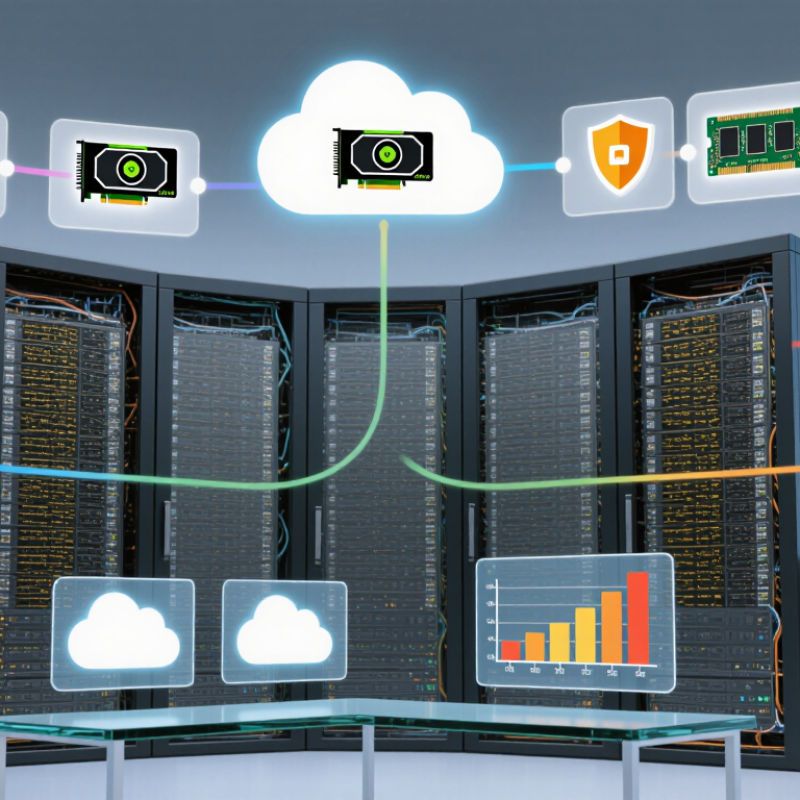
A cloud AI server manufacturer does more than assemble computers. It selects processors, accelerators, memory, storage, and network components, then designs them to work together under heavy workloads. A well-planned system can keep model training and inference running reliably. Details matter: accelerator compatibility, power capacity, cooling paths, and rack dimensions all affect deployment. Even cable placement can influence maintenance and airflow.
The manufacturer’s role may also include testing, documentation, and technical support. Ask how systems are validated under sustained load, what monitoring tools are available, and how replacement parts are handled. Request clear power and cooling estimates for your expected workload. Specifications on paper do not always predict performance in a crowded data center. That part is easy to overlook.
Tips: Compare complete system configurations, not just accelerator counts. Check network bandwidth, memory capacity, service terms, and upgrade options. Ask for workload-specific test results, and confirm what those tests measured. A small pilot can reveal bottlenecks before a larger deployment. Still, no test fully matches every real-world workload; leave room to reassess.
Before comparing cloud AI server manufacturers, describe the work the servers must perform. Training a large model needs sustained accelerator capacity, fast interconnects, and high-bandwidth memory. Inference has different demands: response time, concurrent users, and predictable costs often matter more than peak training speed. A document-search service handling short prompts is not the same workload as image generation at busy hours.
Record model size, input and output lengths, requests per second, and expected growth. Then run a representative pilot. Measure latency, accelerator utilization, memory use, and power draw—not just benchmark scores. Measure before you buy. A small test can still mislead if it misses real traffic spikes.
Our first estimate is often wrong.
Infrastructure limits deserve equal attention. Check rack power, cooling capacity, storage throughput, network bandwidth, and data location requirements. The IEA’s Electricity 2024 report estimated that data centres, AI, and cryptocurrency used about 460 TWh worldwide in 2022; the combined figure could exceed 1,000 TWh by 2026. Uptime Institute’s 2024 Global Data Center Survey also highlights power availability as a planning constraint.
Ask manufacturers for measured performance under your workload, plus clear details on thermal limits and support response times. A fast server is less useful if the facility cannot power it.
Choosing a cloud AI server manufacturer means examining the whole system, not just accelerator counts. Check memory capacity, bandwidth, storage throughput, and sustained power limits against your actual models. Ask for measured performance under long-running workloads, not only peak benchmark results. Heat matters. A dense rack can throttle when cooling and power delivery fall behind. Request thermal test conditions, component replacement procedures, and availability targets in writing.
Networking can become the quiet bottleneck. Compare accelerator-to-accelerator bandwidth, latency, network oversubscription, and support for distributed training. Test data movement using your own workload; a fast specification sheet cannot reveal congestion at busy hours.
Uptime Institute’s 2024 outage analysis reported that 54% of respondents’ most recent significant outages cost over $100,000. That makes redundancy and incident response practical purchasing criteria, not optional extras.
Cloud platform capabilities matter too: verify orchestration, monitoring, identity controls, usage metering, and migration paths. Gartner forecast worldwide public-cloud spending at $675.4 billion in 2024, reflecting the scale of cloud adoption. Still, a larger platform is not automatically a better fit. Compare service-level commitments and support response times, then run a small pilot. I would also revisit assumptions after deployment; real traffic is rarely as neat as a benchmark.
How to Choose a Cloud AI Server Manufacturer?
Assessing Security, Reliability, and Technical Support
Choosing a cloud AI server manufacturer takes more than comparing accelerator counts or hourly rates. Ask how data is encrypted in transit and at rest, who can access management consoles, and how long access logs are kept. Request independent security assessments, incident-response procedures, and clear customer-notification timelines. Ask for proof. Vague assurances should not replace documented controls.
Reliability depends on measurable service commitments. Review uptime definitions, maintenance windows, backup options, and procedures for recovering workloads after an outage. Ask how capacity changes during peak demand, and whether performance tests reflect your model size and data workload. A pilot can reveal slow storage or unstable network performance before a full deployment. It will not uncover every risk, so record what remains untested.
Technical support matters most when a job fails at an inconvenient hour. Check support coverage, escalation paths, and response targets for urgent incidents. Ask whether engineers can help diagnose hardware, networking, and software-layer problems, or only forward tickets. Test the process with a specific technical question before signing. A polished sales call is not the same as useful incident support. Review these answers periodically; systems and operational needs change.
How to Choose a Cloud AI Server Manufacturer?
Compare the full cost of ownership, not just the server’s purchase price. Include power, cooling, networking, software support, and installation. A dense rack may need extra cooling, which can change the budget quickly. A low quote can hide costly service limits. Costs are rarely simple.
Test scalability against real workloads. Ask how quickly capacity can grow when training jobs peak, and whether added nodes work with the existing setup. Check upgrade paths, network bandwidth, and power requirements before committing. Capacity can look generous on paper. Measure actual workloads.
Long-term service matters when hardware fails at 2 a.m. Review response times, repair procedures, warranty coverage, and access to replacement parts. Ask who handles firmware updates and whether support staff understand AI workloads. A detailed service agreement is useful, but it cannot prevent every delay. I would leave room for doubt: forecasts are guesses, and workloads change. Request a clear escalation process, then verify that it matches your team’s operating hours.
Annual downtime implied by different service availability targets
Downtime estimates are calculated from a 365-day year: even a small change in an availability target can substantially affect potential service interruption. When evaluating a manufacturer, review the SLA exclusions and remedies, alongside total cost, capacity-scaling options, and long-term support.
Check accelerator memory, bandwidth, storage speed, and sustained power limits against your actual models. Peak figures are not enough.
Ask for long-run thermal test conditions, cooling requirements, and component replacement steps. Dense racks can throttle when heat builds.
Compare accelerator links, latency, oversubscription, and data movement under your workload. Busy-hour congestion can hide behind a clean specification sheet.
Check orchestration, monitoring, identity controls, usage metering, and migration options. Also read service commitments and support response times.
Include purchase, power, cooling, networking, installation, and software support. A low quote may omit costly service limits. Costs add up.
Run representative jobs, then ask how quickly capacity can expand during peak training. Confirm new nodes fit existing power and network limits.
Review repair procedures, warranty coverage, replacement-part access, firmware updates, and escalation hours. Hardware can fail at 2 a.m.
No. Run a small pilot with real data movement and long-running jobs. I may be overthinking some details, but forecasts change.
Choosing a cloud ai server manufacturer starts with understanding the role its systems will play in your AI environment. Define your workloads, such as model training, inference, or data processing, and estimate the computing power, memory, storage, and capacity you will need. Clear requirements make it easier to compare server configurations, networking performance, and cloud platform compatibility without paying for capabilities that do not fit your use case.
Next, assess each manufacturer’s approach to security, reliability, and technical support. Consider how it helps protect data, maintain service availability, and resolve issues as your needs change. Compare pricing alongside options for scaling resources and the quality of long-term maintenance and service. A suitable partner should offer a practical balance of performance, flexibility, dependable support, and predictable costs, helping your AI infrastructure grow while remaining aligned with your operational goals.
