Zyphora
Choosing the best industrial ai server manufacturer in 2026 requires more than comparing processor names or attractive product pages. Industrial buyers need dependable performance inside factories, laboratories, energy sites, and transportation networks. Dust, heat, vibration, limited rack space, and unstable connectivity can expose weak designs quickly. A powerful server is not automatically a reliable industrial platform.
Jensen Huang, NVIDIA’s founder and CEO, has said, “AI is the most important technology of our time.” That statement reflects the market’s direction, but it does not remove the buyer’s responsibility. Each manufacturer should be examined through verified benchmarks, GPU availability, thermal engineering, remote management, cybersecurity practices, warranty terms, and long-term spare-part support. Ask for evidence. Request workload-specific testing.
Real experience matters here. A vision inspection system may process thousands of camera images daily, while a predictive maintenance model may need steady inference beside noisy machinery. These environments demand different server configurations. Some vendors offer excellent computing density but weak field service. Others provide rugged systems but limited software support. No ranking is flawless.
That is the uncomfortable part.
This guide evaluates leading manufacturers through practical buyer criteria rather than marketing language alone. It considers performance, reliability, integration flexibility, total ownership cost, and support responsiveness. Readers should still validate every shortlist against local operating conditions and deployment goals. The right decision is rarely the cheapest one. It is the system that keeps delivering useful results after installation, upgrades, and unexpected failures.
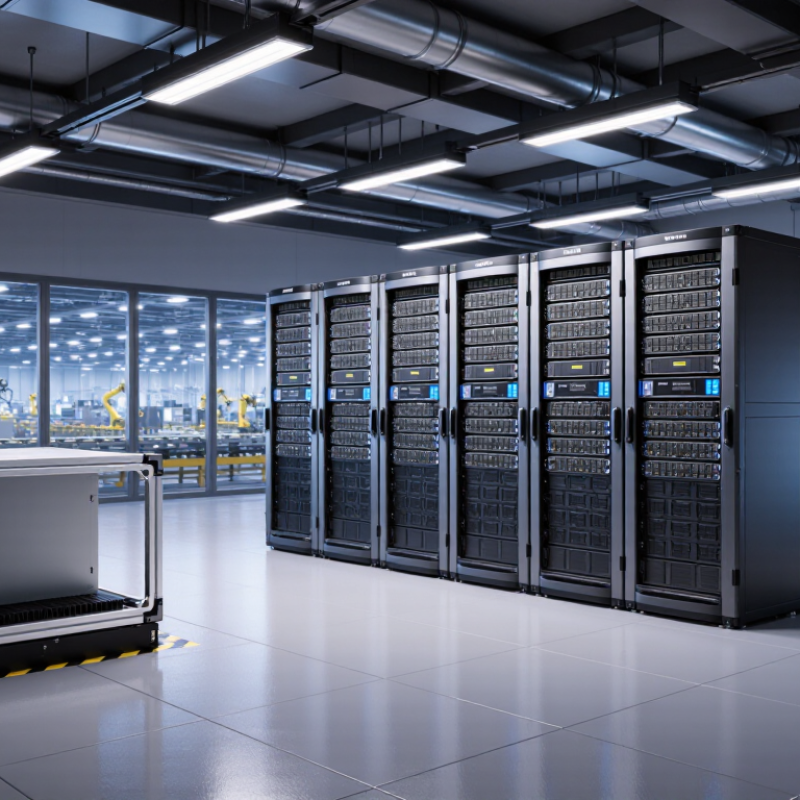
An industrial AI server in 2026 is not simply a faster rack computer. It must survive dust, vibration, heat, and unstable network conditions. Its design should support predictable inference beside machines, not only remote model training. Buyers should examine operating temperatures, fault recovery, long-term parts availability, and secure device management. Industrial reliability is measurable.
The power question is becoming harder. The International Energy Agency’s Energy and AI report estimates that data centers used about 415 TWh of electricity in 2024. Demand could reach roughly 945 TWh by 2030. Therefore, an efficient server needs more than high accelerator performance. It needs workload-based power controls, effective cooling, and clear performance-per-watt records. Small details matter, such as whether filters can be replaced without stopping production.
Connectivity also defines the category. An industrial AI server should process camera, sensor, and control data locally when latency or privacy matters. It should integrate with established industrial networks and follow recognized cybersecurity practices, including IEC 62443 principles. The Stanford AI Index 2025 reported that capable AI inference costs fell more than 280-fold between late 2022 and late 2024. That changes buying logic. Maximum hardware may not deliver maximum value.
The definition remains imperfect. Some systems called industrial are ordinary servers placed inside factories. That label is not enough. Buyers should request thermal test records, outage procedures, software update policies, and real deployment evidence. Fancy specifications can still hide weak maintenance planning.
2026 Best Industrial AI Server Manufacturers for Buyers?
Key Specifications and Features for Industrial AI Servers
Industrial AI servers need more than high benchmark scores. Buyers should examine accelerator performance, memory capacity, and sustained thermal output. A practical system may use multiple AI accelerators, ECC memory, and a high-lane PCIe architecture. ECC memory helps protect long training runs from silent data errors. At least 128 GB of RAM suits many vision and predictive maintenance workloads. Larger models may require far more.
Check the power design carefully. A server drawing several kilowatts needs reliable power distribution, airflow, and temperature monitoring. Redundant power supplies can reduce downtime, but they also increase heat and operating cost. In factory tests, poor airflow often limits performance before the processors reach their advertised potential. This detail is easy to miss.
Fast storage matters during video ingestion and dataset processing. NVMe drives, RAID support, and separate operating-system storage can improve recovery and workload stability. Industrial networking should support low-latency links, time synchronization, and secure remote management. Look for dust-resistant chassis options, vibration tolerance, and accessible filters when servers operate near production equipment. Security features should include hardware-based encryption, secure boot, role-based access, and controlled firmware updates. Long lifecycle support is equally important, because replacing a validated server every year is rarely practical. Higher accelerator counts are not always better. Performance depends on software compatibility, cooling, and the actual workload. Buyers should test representative data before approving a final configuration.
Reference power allocation for a high-density industrial AI server. Actual values vary by accelerator count, workload, cooling method, and configuration.
Industrial AI systems commonly support multiple data-center GPUs or AI accelerators with roughly 24–96 GB of memory per accelerator.
Configurations from 256 GB to 1 TB of ECC memory are suitable for large models, digital twins, and high-volume sensor data.
100 GbE or InfiniBand-class networking can reduce data-transfer bottlenecks in distributed training and real-time inference.
ECC memory, redundant power supplies, hot-swappable storage, remote management, and industrial-temperature options are key buyer criteria.
In 2026, choosing the best industrial AI server manufacturers requires more than comparing processor counts. Serious buyers should examine thermal design, accelerator compatibility, memory capacity, and long-term support. A factory server may operate beside dust, vibration, and uneven power. It needs stable performance at the edge, not impressive numbers in a quiet laboratory. Manufacturers with documented testing, traceable components, and responsive engineering teams deserve closer attention. Ask for measured inference performance under your workload. Marketing figures can mislead.
Leading industrial AI server manufacturers also provide configurable platforms for vision inspection, predictive maintenance, robotics, and digital twins. Look for redundant power supplies, remote monitoring, secure boot, and replaceable storage. Service terms matter when one stopped server can delay production. Request references from similar temperatures and network conditions. Technical documentation should explain firmware updates clearly. No shortlist is perfect. Even experienced teams sometimes underestimate cable space and cooling clearance.
Tips: Define model size, camera count, latency targets, and operating temperature before contacting manufacturers. Compare five-year costs, including energy, support, and replacement parts. Test a sample unit with real sensor streams. Check local service coverage and escalation times. Keep spare components on site. A cheaper purchase may become expensive during a night shift.
Choosing the right industrial AI server manufacturer in 2026 requires more than comparing processor names. Buyers should examine real deployment experience, thermal design, service response, and long-term supply stability. A reliable manufacturer can explain performance inside dusty factories, control rooms, and high-temperature production areas.
Ask for evidence from similar workloads, such as machine vision, predictive maintenance, or digital-twin simulations. Review independent test data, warranty terms, firmware update policies, and documented safety certifications. Check whether the supplier provides clear power consumption figures at idle and full load. Vague claims deserve careful questioning.
Tips: Request a sample configuration and calculate its total operating cost. Confirm rack dimensions, noise levels, cooling requirements, and replacement-part availability. Speak with technical staff, not only sales representatives. A short factory visit may reveal cable quality, assembly discipline, and testing procedures.
Run a controlled pilot before placing a large order. Measure inference speed, uptime, recovery time, and support response under realistic conditions. One overlooked detail is local service coverage; a delayed replacement can stop an entire production line. I would also compare contract language carefully, because attractive specifications cannot repair weak accountability. No comparison is perfect. Real workloads often expose assumptions that brochures hide.
Choosing an industrial AI server starts with the workload, not the product label. Define whether it will inspect images, analyze sensor streams, or run predictive maintenance models. A factory camera may need fast inference, while a digital twin often requires stronger memory and graphics processing. Bigger is not always better.
Check thermal performance in real conditions. A server beside a welding line may face dust, vibration, heat, and unstable airflow. Look for wide-temperature operation, filtered cooling, and clear service access. I have seen impressive specifications fail because maintenance teams could not replace a fan quickly. That detail matters.
Reliability also depends on power protection, storage design, and network options. Redundant power supplies and error-correcting memory can reduce costly interruptions. Fast local storage helps when cloud connections become slow or unavailable. Test the system with your own data before purchasing. Vendor benchmarks may use cleaner workloads than your factory does. A pilot should measure response time, noise, energy use, and recovery after a component failure.
Security needs equal attention. Ask about secure boot, firmware updates, access control, and audit records. Confirm that updates can be managed without stopping production. Review technical support, spare-part availability, warranty terms, and expected service life. An inexpensive server may become expensive when parts disappear early. This is easy to overlook. Procurement teams should also verify applicable safety, cybersecurity, and electrical requirements in each operating region.
Check thermal design, accelerator compatibility, memory capacity, and long-term support. Processor counts alone reveal little. Ask for measured results.
Factory servers face dust, vibration, heat, and uneven power. Test performance near real production conditions, not only in quiet laboratories.
Common workloads include machine vision, predictive maintenance, robotics, and digital-twin simulations. Request evidence from similar deployments.
Ask for independent test data and a sample configuration. Stream real camera or sensor data during a controlled pilot.
Useful features include redundant power supplies, remote monitoring, secure boot, and replaceable storage. Leave enough room for cables and airflow.
Review warranty terms, firmware updates, local coverage, and escalation times. A delayed replacement can stop a production line.
Include energy, support, replacement parts, and cooling requirements. A cheaper purchase may become expensive during a night shift.
Measure inference speed, uptime, recovery time, power use, and support response. Real workloads often expose hidden assumptions.
Documentation should explain firmware updates, safety certifications, power consumption, and replacement procedures. Vague claims deserve careful questioning.
Yes. Teams may underestimate cooling clearance, cable space, or local service delays. No shortlist is perfect.
Choosing the best industrial ai server manufacturer in 2026 requires more than comparing processing power. An industrial AI server is designed for demanding environments where reliable performance, continuous operation, and real-time data processing are essential. Buyers should evaluate specifications such as GPU and CPU capability, memory capacity, storage speed, network bandwidth, expansion options, thermal management, power efficiency, and compatibility with industrial software. Rugged construction, remote monitoring, security controls, and long-term system support are also important features.
When comparing manufacturers, buyers should examine product quality, customization options, technical documentation, warranty coverage, delivery stability, service responsiveness, and experience with industrial applications. The right choice depends on workload type, deployment environment, scalability requirements, maintenance resources, and total ownership cost. A careful evaluation should balance computing performance with reliability, lifecycle support, energy consumption, and future upgrade potential, helping organizations select an industrial AI server that can deliver stable value in demanding production and operational settings.