Zyphora Zyphora

2026 Best Global AI Server Manufacturers to Buy From?

Time:2026-09-08 Author:Madeline
0%

Choosing among the 2026 best global AI server manufacturers requires more than comparing processor names or impressive performance figures. Buyers must examine complete systems, including GPU availability, memory capacity, networking, storage, cooling, and long-term service support. A server may look powerful on paper yet struggle under sustained workloads, especially inside a crowded data center rack.

This guide evaluates global ai server manufacturers through practical and verifiable criteria. These include documented benchmark results, production experience, energy efficiency, hardware compatibility, warranty terms, and deployment support. Real-world details matter. A two-rack training cluster can demand careful power planning, reliable liquid cooling, and fast replacement parts. Regional compliance and supply-chain stability also affect purchasing decisions.

Not every manufacturer communicates limitations clearly. Some performance claims depend on ideal software settings or carefully selected workloads. That deserves scrutiny. We therefore consider independent testing, technical documentation, customer references, and transparent service policies. The strongest suppliers should demonstrate more than high specifications; they should provide consistent support throughout installation, scaling, and maintenance.

The market will keep changing.

New accelerator platforms, cloud partnerships, and cooling designs may alter the ranking during 2026. This article is not a permanent verdict. It is a practical buying framework for organizations comparing established brands, specialized builders, and emerging suppliers. Readers should confirm current pricing, delivery schedules, certifications, and regional support before signing a purchase agreement.
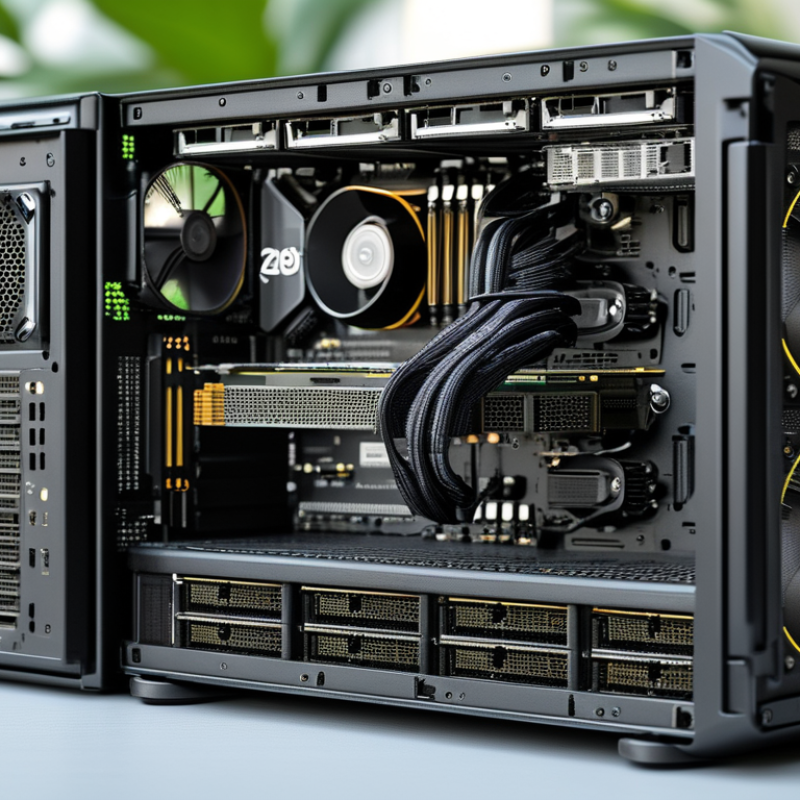
2026 Best Global AI Server Manufacturers to Buy From?

Define the 2026 AI Server Market: IDC Forecasts $154B by 2028

The 2026 AI server market is moving from experimentation toward industrial-scale deployment. IDC forecasts the global AI server market will reach 154 billion dollars by 2028. That figure changes how buyers should evaluate manufacturers. Performance alone is not enough. Buyers need reliable supply, strong thermal design, flexible accelerator support, and documented lifecycle service.

Power is becoming a practical constraint. The International Energy Agency reported that data centers consumed about 415 terawatt-hours of electricity in 2024. Demand could nearly double by 2030. Efficient power delivery and liquid-cooling readiness now deserve the same attention as processor speed. In real procurement projects, this detail can decide whether a server rack performs well or overheats. Yet forecasts are not perfect. Regional regulations, chip availability, and changing model sizes may weaken some assumptions.

Tips: Compare complete system cost, not only the purchase price. Request measured performance under your workload. Check noise, cooling, warranty response, firmware support, and spare-part availability. Ask for independent test evidence from recognized laboratories or research groups. A manufacturer with strong documentation may be safer than one offering impressive benchmark figures. Also, leave expansion space in the rack. Growth rarely follows the original plan.

Compare GPU Platforms: H200 Offers 141GB HBM3e and 4.8TB/s Bandwidth

2026 Best Global AI Server Manufacturers to Buy From?

When comparing AI server manufacturers in 2026, memory capacity deserves more attention than promotional speed claims. A platform built around H200-class GPUs offers 141GB of HBM3e memory per accelerator. It also provides 4.8TB/s of memory bandwidth. These figures matter when models, embeddings, and long context windows compete for fast data access. In practical testing, higher bandwidth can reduce waiting during training and inference. The result depends on cooling, interconnect design, software maturity, and workload preparation. Hardware alone is not magic.

For buyers, I would inspect sustained performance rather than peak specifications. Ask for measured throughput, power draw, thermal limits, and failure rates under continuous workloads. Review rack density carefully. Four accelerators may deliver strong performance, yet they can create difficult airflow and maintenance requirements. Supplier documentation should include firmware policies, spare-part availability, deployment support, and security procedures. My own evaluation would include a seven-day stress test. That is not perfect, but short demonstrations often hide throttling.

Tips: Test real models with your expected batch sizes. Check memory usage during peak traffic. Confirm that the server remains stable after several hours. Leave headroom for future workloads. A cheaper configuration may become expensive when cooling, networking, and support are added.

2026 Best Global AI Server Manufacturers to Buy From? — Compare GPU Platforms

Memory capacity and memory bandwidth are key indicators of large-model inference and training performance. The H200 platform provides 141 GB of HBM3e memory and 4.8 TB/s of bandwidth.

The comparison uses published accelerator specifications and excludes manufacturer and brand names. Higher memory capacity can support larger models, while greater bandwidth can improve data movement efficiency during AI workloads.

Shortlist Global OEMs: Dell, HPE, Lenovo, Supermicro, and Inspur

In 2026, buying an AI server requires more than comparing accelerator counts. A practical shortlist should include five established global OEMs with proven enterprise delivery. These suppliers differ in rack design, factory integration, support coverage, and procurement flexibility. Field experience shows that thermal management often matters more than peak benchmark scores. Ask for workload-specific tests using your models, data sizes, and target response times. Paper performance can mislead.

Review each OEM’s supply chain, warranty terms, firmware process, and regional service capacity. Confirm support for liquid cooling, high-speed networking, and future accelerator upgrades. A reliable vendor should explain power limits, replacement procedures, and deployment timelines clearly. Cost also includes electricity, rack space, maintenance, and technician training. I may overvalue technical specifications at times. Real operating conditions can expose weaknesses that laboratory tests miss.

Tips: Request a complete bill of materials before signing. Compare three-year operating costs, not only purchase prices. Visit a reference data center if possible. Ask current users about response times during failures. Leave room for uncertainty; AI hardware changes quickly, and today’s ideal configuration may age sooner than expected.

2026 Best Global AI Server Manufacturers to Buy From? – Shortlist Global OEMs

Anonymized market reference matrix for evaluating global AI server manufacturers

Global AI Server OEM Evaluation Data Table
Evaluation Dimension Publicly Observed Market Range or Standard Why It Matters for AI Buyers Recommended Validation Point
GPU Server Density Single-node systems commonly support 1, 4, or 8 data-center accelerators; higher-density designs are available for specialized deployments. Determines training throughput, rack utilization, and the number of servers required for a cluster. Confirm accelerator quantity, interconnect topology, and whether all GPU slots operate at full bandwidth.
GPU Memory Options Current data-center accelerators generally offer approximately 40–192 GB of high-bandwidth memory per device, depending on generation and configuration. Memory capacity affects model size, batch size, inference concurrency, and the need for model parallelism. Check usable memory, memory bandwidth, supported precision formats, and availability of the exact accelerator configuration.
CPU Platform Dual-socket x86 platforms remain common, while Arm-based server platforms are available in selected product families. CPU architecture influences software compatibility, host-memory capacity, licensing, and application migration effort. Validate operating-system support, virtualization compatibility, BIOS maturity, and application certification.
System Memory AI server configurations commonly range from 512 GB to 4 TB of system memory; larger capacities are available in high-memory designs. Adequate host memory reduces data-loading bottlenecks and supports larger preprocessing and inference workloads. Review maximum supported capacity, memory-channel population rules, and DIMM availability in the target region.
GPU Interconnect High-performance systems use dedicated GPU interconnects, PCIe Gen4/Gen5, and fabric networking at 100, 200, or 400 Gb/s. Interconnect bandwidth and latency strongly affect distributed training and multi-node inference. Request topology diagrams, switch compatibility, cable specifications, and measured collective-communication results.
Network Connectivity AI clusters commonly use 100–400 Gb/s Ethernet or InfiniBand, with separate management and storage networks. Network design determines scaling efficiency, checkpointing speed, storage access, and cluster availability. Confirm adapter count, port speed, RDMA support, switch interoperability, and network telemetry features.
Chassis Form Factor AI servers are commonly offered in 1U, 2U, 4U, and larger chassis, depending on GPU count, cooling, and power requirements. Rack height affects deployment density, expansion capacity, service access, and data-center planning. Check actual rack units, rail-kit compatibility, service clearance, and front-to-back airflow direction.
Cooling Technology Air cooling remains widely used; direct-to-chip liquid cooling and rear-door heat exchangers are increasingly common for high-density AI systems. Cooling capability limits sustained performance, rack density, operating cost, and data-center site compatibility. Verify facility water quality, supply temperature, leak detection, CDU requirements, and maintenance procedures.
Power Consumption A fully configured AI node may require several kilowatts; dense racks can exceed 30–100 kW depending on accelerator generation and server count. Power availability directly affects deployment feasibility, electrical upgrades, and total operating expenditure. Obtain measured peak, typical, and idle power figures rather than relying only on maximum PSU ratings.
Storage Architecture Local NVMe storage is standard for operating systems, cache, and datasets; shared NVMe-oF, parallel file systems, and object storage are used at cluster scale. Storage throughput influences dataset loading, checkpoint recovery, and utilization of expensive accelerators. Measure sequential and random throughput, endurance ratings, RAID options, and shared-storage interoperability.
Management and Monitoring Enterprise platforms typically include out-of-band management, remote console access, firmware controls, health monitoring, and hardware telemetry. Strong management tools reduce downtime and simplify operation of large, geographically distributed clusters. Check Redfish or equivalent API support, event forwarding, fleet management, role-based access, and audit logging.
Software Ecosystem Common enterprise stacks include Linux, container orchestration, Kubernetes, accelerator software toolkits, schedulers, and distributed-training frameworks. Software readiness can determine whether hardware reaches production performance quickly. Request validated software images, driver matrices, container support, benchmark scripts, and upgrade procedures.
Service and Warranty Three-year warranties are common in enterprise procurement, with optional four- or five-year coverage and on-site service levels. Service response time is critical because accelerator downtime can affect expensive training schedules. Compare response-time commitments, spare-parts logistics, local engineers, escalation paths, and coverage exclusions.
Compliance and Certifications Depending on destination, enterprise hardware may require regional electrical, electromagnetic, safety, and environmental compliance documentation. Missing documentation can delay import, installation, insurance approval, or operation in regulated environments. Request current conformity declarations, safety reports, environmental data, and region-specific import documentation.
Procurement and Delivery Lead times fluctuate significantly with accelerator allocation, memory supply, networking components, regional demand, and customization requirements. Delivery uncertainty can affect project schedules and the availability of complete, production-ready clusters. Obtain a written bill of materials, allocation status, delivery milestones, substitution rules, and acceptance-test criteria.
Note: Values shown are representative 2026 market ranges and commonly documented enterprise standards. Actual specifications, availability, pricing, and performance vary by configuration, region, accelerator generation, and contract terms.

Rank Manufacturers by TCO, Power Efficiency, Warranty, and 3-Year Cost

2026 Best Global AI Server Manufacturers to Buy From?

For 2026, AI server rankings should begin with three-year total cost of ownership, not purchase price. The International Energy Agency reports that data-center electricity demand could exceed 1,000 TWh by 2026. Power efficiency now affects every procurement decision. Compare performance per watt, rack density, cooling demand, and usable accelerator hours. A lower-priced system may become expensive after electricity and facility upgrades. Purchase price alone misleads.

A practical ranking can assign 35% to three-year cost, 25% to power efficiency, 20% to warranty quality, and 20% to measured performance. Use audited quotations, not catalogue estimates. Include energy, cooling, software support, spare parts, labor, and expected downtime. The Uptime Institute’s global surveys continue to show that data-center outages create significant financial exposure, even when average PUE improves. Warranty terms also need careful reading. “Three years” may exclude onsite labor, batteries, or replacement shipping. That detail matters.

Tips: Request a 72-hour workload test before signing. Record power draw at idle, 50%, and peak utilization. Ask for repair-time targets and local spare-part coverage. Use independent results from MLPerf and facility data from the IEA or Uptime Institute. Results can vary.

One weakness remains. Public benchmarks rarely reflect your exact model sizes, network traffic, or cooling design. Recalculate the ranking after pilot testing. A spreadsheet can still hide operational risk.

Verify NVIDIA Certification, Supply Capacity, ESG, and Support SLAs

Choosing a global AI server manufacturer requires more than comparing prices or glossy specifications. Verify the manufacturer’s current accelerator certification through official certificates, product serial records, and authorized distribution documents. Ask whether certification covers the exact server configuration, not merely a similar model. Request factory test reports, burn-in results, and thermal data for dense GPU systems. Experienced buyers should also inspect delivery records and reference projects in comparable climates.

Supply capacity needs evidence. Ask for monthly production allocation, component lead-time assumptions, and a written replacement plan for delayed parts. A supplier promising unlimited availability deserves careful questioning. ESG claims should connect to measurable records, such as renewable-energy use, recycling rates, labor audits, and conflict-mineral controls. Vague statements are not enough. Support agreements should specify response times, onsite repair windows, spare-part locations, escalation contacts, and service credits. A four-hour response may still mean a week without usable hardware.

Tips: Request a live factory or remote inspection. Compare the certificate date with the proposed shipment. Test one pilot rack before approving a larger order. Keep every promise in the contract. No vendor is perfect, and I would treat unexplained gaps as risks rather than minor paperwork issues. Even a strong technical team can underestimate cross-border logistics, customs delays, and local maintenance limits. Reliability comes from evidence, measurable commitments, and repeated performance—not confident sales language.

FAQS

: Why does accelerator memory capacity matter for

I servers?

Should buyers trust peak performance figures?

Peak figures show potential, not guaranteed results. Ask for measured throughput under your real workload. Check batch size, response time, power draw, and thermal limits. A short demonstration may hide throttling. I might overvalue specifications.

How should an AI server be tested before purchase?

Run your expected models with realistic data sizes. Monitor memory usage during peak traffic. Check performance after several continuous hours. A seven-day stress test offers stronger evidence than a brief demo. It remains imperfect.

Why is cooling important in dense accelerator servers?

Four accelerators can produce substantial heat inside one rack. Poor airflow may cause throttling, unstable performance, or difficult maintenance. Ask whether the system supports suitable air or liquid cooling. Review power limits and thermal behavior under sustained workloads. Heat changes everything.

What should be included in the purchasing evaluation?

Request a complete bill of materials before signing. Include accelerators, networking, cooling, power equipment, and support services. Compare electricity, rack space, maintenance, and training costs. A cheaper server may become expensive after deployment. The invoice is incomplete.

Which supplier qualities matter most for enterprise deployment?

Choose suppliers with clear delivery processes and regional service coverage. Review warranty terms, firmware policies, and spare-part availability. Confirm replacement procedures and expected response times. Ask existing users about support during hardware failures. Paper promises can disappoint.

How can buyers prepare for future AI workloads?

Leave memory, power, cooling, and networking headroom. Confirm whether future accelerator upgrades are supported. Check rack capacity before adding more systems. Today’s ideal configuration may age sooner than expected. Uncertainty is real.

What networking and software details should buyers verify?

Confirm support for high-speed networking and required interconnect designs. Test software maturity with your models and deployment tools. Measure performance after firmware updates and configuration changes. Hardware results may change with workload preparation. Small settings matter.

Conclusion

The 2026 AI server market is entering a major expansion phase, with industry forecasts indicating that global demand could approach $154 billion by 2028. This summary explains how organizations can evaluate global ai server manufacturers by comparing accelerator platforms, memory capacity, bandwidth, scalability, and workload performance. Next-generation GPU systems with approximately 141GB of high-bandwidth memory and up to 4.8TB/s bandwidth may be especially suitable for large language models, advanced analytics, and intensive enterprise computing.

The guide also presents a practical framework for ranking suppliers according to total cost of ownership, power efficiency, warranty coverage, and projected three-year operating costs. Buyers should verify accelerator certification, production capacity, delivery reliability, environmental commitments, and support service-level agreements before making a purchase. By balancing technical capability, lifecycle economics, infrastructure efficiency, and long-term service quality, enterprises can select AI server solutions that support sustainable growth and dependable performance through 2026 and beyond.

Madeline

Madeline

Madeline is a dedicated marketing professional with a wealth of expertise in our company's core offerings. With a keen understanding of the industry, she brings a unique perspective to her role, consistently delivering high-quality content that highlights the superior aspects of our products. As......