Zyphora
Choosing the right ai server manufacturing company is no longer a simple purchasing exercise. Global buyers must examine performance, reliability, delivery capacity, and long-term support. A server may look powerful on paper, yet fail under sustained workloads, high temperatures, or unstable power conditions.
Jensen Huang, CEO of NVIDIA, once said, “The iPhone moment of AI is here.” His statement reflects a major shift in business infrastructure. AI servers now support medical research, financial modeling, industrial automation, and content development. However, strong demand can hide practical weaknesses. Some manufacturers provide impressive specifications but limited technical service outside their home markets. Others offer fast delivery while relying on uncertain component supply chains.
This 2026 guide reviews leading AI server manufacturing companies for international buyers. It considers GPU compatibility, liquid and air cooling, rack density, energy efficiency, cybersecurity practices, certifications, customization, and regional support. It also examines warranty terms and replacement procedures, because downtime rarely appears in a product brochure.
The ranking is not perfectly universal. Buyer priorities differ.
A research laboratory may value maximum accelerator density. A cloud provider may focus on predictable maintenance costs. A smaller enterprise may need simpler deployment and clearer documentation. These differences matter. Therefore, this guide combines manufacturer capability with practical purchasing concerns, helping readers compare suppliers more realistically before signing a global contract.
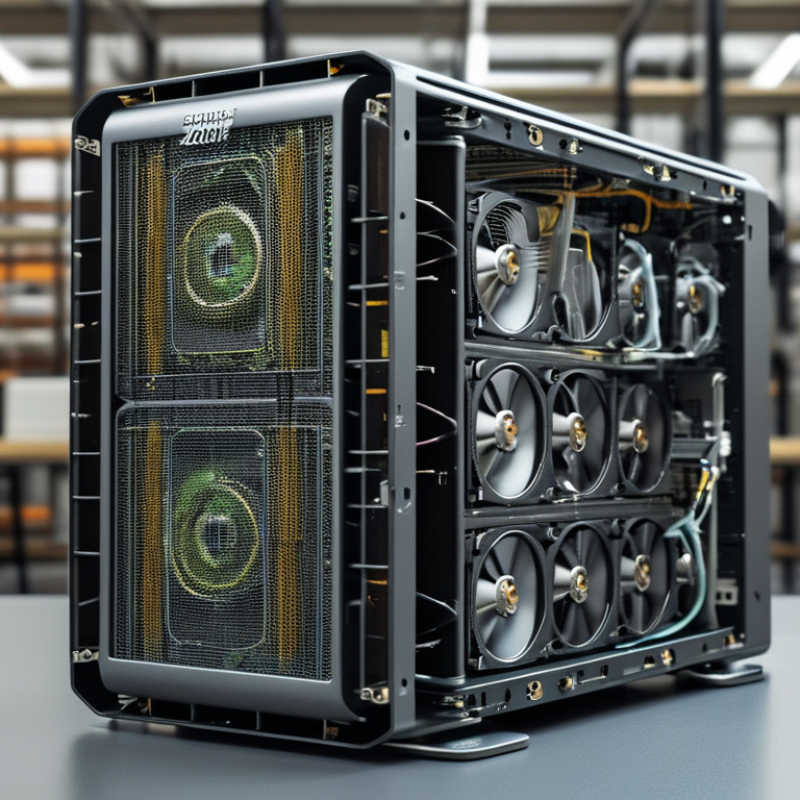
AI server manufacturing is the engineering and production of computing systems designed for artificial intelligence workloads.
It includes server chassis, accelerators, high-bandwidth memory, networking, storage, cooling, firmware, and validation. These systems process model training, inference, simulation, and data analytics at high speed.
The market is expanding rapidly. TrendForce reported that global AI server shipments were expected to grow by about 28% in 2025. IDC’s Worldwide AI and Generative AI Spending Guide also identifies infrastructure as a major part of enterprise AI investment. These figures show strong demand, but manufacturing is not only about installing powerful processors.
A practical factory must manage thermal testing, power distribution, component traceability, and supply continuity. Small design errors can create unstable workloads or excessive electricity use.
The industry role is becoming broader.
Manufacturers now support data-center integration, rack-level testing, liquid-cooling deployment, and long-term maintenance. The International Energy Agency has warned that data-center electricity demand may more than double by 2030, partly because of AI growth. Efficiency therefore matters as much as raw performance.
The boundary remains messy. Some suppliers assemble systems, while others design platforms and control production standards. Buyers should inspect test records, service coverage, upgrade paths, and energy measurements instead of trusting headline specifications. In real deployments, a slightly slower server may deliver better value when it runs cooler, fails less often, and fits existing power limits.
Modern AI server production now depends on more than powerful processors. It combines accelerator modules, high-bandwidth memory, fast interconnects, and advanced power delivery. The Stanford AI Index 2025 reports that AI training compute has doubled roughly every five months. This pressure is reshaping server design. Engineers use modular boards and liquid cooling to manage dense racks, where airflow alone may become insufficient. Direct-to-chip cooling can move heat from processors through cold plates, pumps, and heat exchangers. It is efficient, but maintenance becomes more demanding.
High-speed networking is equally important. Low-latency fabrics reduce communication delays between accelerators during distributed training. Smart network adapters can also offload data movement and security tasks. Meanwhile, baseboard management controllers monitor temperature, voltage, fan speed, and hardware faults. The International Energy Agency estimates that data-center electricity use could reach about 1,000 TWh globally by 2026. This makes efficient power supplies, workload scheduling, and heat reuse practical purchasing concerns. Yet, specifications can look impressive while real performance remains uneven. Buyers should request measured results, not only theoretical peak figures.
Tips: Ask manufacturers for rack-level power data, cooling requirements, firmware update policies, and independent benchmark results. Check performance under sustained workloads, not short demonstrations. Verify component traceability and regional service capacity. A small pilot rack can expose compatibility problems early. Thermal testing is often overlooked. It should not be.
Company-neutral technology and manufacturing reference table for evaluating AI server production capabilities, system integration quality, and global deployment readiness.
| Evaluation Dimension | Core Technology Used in Modern AI Server Production | Verified Technical Reference | Why It Matters to Global Buyers | Recommended Factory or Supplier Evidence |
|---|---|---|---|---|
| AI Accelerator Integration | Multi-accelerator server architecture using PCIe-attached or dedicated scale-up accelerator modules. | Modern AI systems commonly combine host CPUs with parallel accelerators and high-bandwidth memory for training and inference workloads. | Determines model-training throughput, inference density, thermal design requirements, and total cost per workload. | Validated accelerator compatibility list, mechanical drawings, power-budget report, firmware compatibility record, and workload benchmark methodology. |
| Host-to-Accelerator Interconnect | PCI Express 5.0 or PCI Express 6.0 for high-speed attachment between CPUs, accelerators, storage, and network adapters. | PCIe 5.0: 32 GT/s per lane PCIe 6.0: 64 GT/s per lane PCIe 6.0 uses PAM4 signaling, FLIT-based transport, and forward-error correction. |
Higher link speed improves device-to-host bandwidth and supports dense accelerator, storage, and networking configurations. | PCIe compliance results, link-training logs, lane-width validation, signal-integrity report, and performance testing under maximum system load. |
| Accelerator Scale-Up Fabric | Dedicated high-speed accelerator-to-accelerator fabric, commonly implemented with proprietary or open interconnect technologies. | Scale-up fabrics reduce dependence on host-memory transfers and improve communication efficiency in distributed training and large-model inference. | Important for collective operations, tensor parallelism, model sharding, and low-latency communication among accelerators in one chassis. | Topology diagram, bisection-bandwidth results, collective-communication benchmark, fabric error logs, and supported software stack. |
| High-Bandwidth Memory | Stacked high-bandwidth memory integrated with AI accelerators, typically using advanced 2.5D packaging or interposer-based designs. | HBM is a JEDEC-standardized stacked-memory technology designed to provide substantially greater memory bandwidth than conventional DIMM-based memory. | Reduces memory bottlenecks for matrix operations, recommendation systems, scientific computing, and large-language-model workloads. | Accelerator memory capacity and bandwidth documentation, thermal characterization, memory-error reporting, and workload-level bandwidth tests. |
| System Memory | ECC DDR5 registered memory for general-purpose CPU workloads, orchestration, data preprocessing, and host-side caching. | DDR5 supports higher data rates and improved power-management features compared with earlier DDR generations; ECC is required for data-integrity-sensitive deployments. | Supports reliability, virtualization, data preparation, checkpoint handling, and operating-system stability. | Qualified-memory list, ECC test results, maximum-capacity validation, memory-training logs, and long-duration stress-test records. |
| Coherent Memory Expansion | Compute Express Link, including CXL 2.0 and CXL 3.0 device and fabric capabilities where supported by the platform. | CXL is built on PCIe physical-layer technology and defines protocols for memory, I/O, and cache coherency; CXL 2.0 adds memory pooling and switching capabilities. | Enables more flexible memory capacity, resource sharing, and composable infrastructure for memory-intensive AI workloads. | CXL device compatibility matrix, firmware interoperability results, memory-pooling test, failover procedure, and operating-system support statement. |
| AI Networking | 400GbE or 800GbE networking with high-radix switching, RDMA support, congestion management, and loss-aware transport tuning. | IEEE 802.3 Ethernet standards include 400 Gb/s and higher-speed Ethernet implementations; RDMA can reduce CPU involvement in data movement. | Critical for distributed training, multi-node inference, dataset access, and synchronization across server clusters. | Network throughput and latency report, RDMA validation, congestion-control configuration, optical or copper link qualification, and interoperability testing. |
| Local Storage | Enterprise NVMe solid-state drives connected through PCIe, commonly using multiple drives for operating systems, datasets, cache, and checkpoints. | NVMe is designed for non-volatile memory over PCIe and supports parallel queues with low software overhead. | Influences dataset staging, checkpoint recovery time, container deployment, and local inference-cache performance. | Drive qualification list, sustained-write test, endurance rating, thermal-throttling results, RAID or software-defined-storage validation. |
| Thermal Management | High-capacity air cooling, direct-to-chip liquid cooling, rear-door heat exchangers, or hybrid cooling architectures. | Direct-to-chip liquid cooling removes heat at the processor or accelerator cold plate and is suitable for higher rack heat densities than conventional air cooling alone. | Determines sustained performance, rack density, facility water requirements, operating noise, and energy consumption. | Thermal design power validation, inlet-temperature test, coolant-flow specification, leak-detection test, pressure test, and maintenance procedure. |
| Power Delivery | High-efficiency redundant power supplies with digitally monitored power distribution and, in some high-density designs, 48 V DC rack distribution. | Redundant power architectures improve availability; 48 V DC distribution can reduce current levels and distribution losses compared with lower-voltage high-current designs. | Supports accelerator power transients, uptime targets, facility compatibility, and predictable operating costs. | Efficiency test across load levels, transient-response report, redundancy test, power-capping behavior, input-voltage range, and safety certification. |
| Rack-Level Architecture | Modular 19-inch server platforms, open rack systems, or custom high-density rack-scale solutions with serviceable compute, power, and cooling modules. | Rack-scale designs allow coordinated power, cooling, networking, and management across multiple compute nodes. | Improves deployment consistency and simplifies cluster expansion, field service, and spare-parts planning. | Rack elevation drawings, weight distribution, cable-management plan, service-clearance requirements, and full-rack thermal and power test. |
| Remote Management | Baseboard Management Controller functions using Redfish, IPMI compatibility where required, telemetry, remote console, and fleet automation. | DMTF Redfish is a RESTful standard for managing servers and data-center infrastructure over HTTPS using structured data formats. | Enables remote provisioning, health monitoring, firmware updates, asset tracking, and faster failure diagnosis across international sites. | Redfish schema support, API automation demo, role-based-access test, audit-log export, firmware rollback procedure, and alert integration. |
| Security Architecture | Secure boot, hardware root of trust, signed firmware, Trusted Platform Module support, measured boot, and firmware-update protection. | Trusted Platform Module specifications are maintained by the Trusted Computing Group; NIST SP 800-193 addresses platform firmware resiliency. | Protects AI models, credentials, firmware, customer data, and supply-chain integrity in enterprise and regulated environments. | Secure-boot records, firmware-signing policy, vulnerability-response process, component traceability, penetration-test summary, and certificate inventory. |
| Manufacturing Validation | Automated optical inspection, board-level testing, system burn-in, accelerator stress testing, network validation, and firmware verification. | Production screening commonly combines automated test equipment, functional testing, thermal cycling, and extended load testing to detect early-life failures. | Reduces DOA rates, improves consistency between production batches, and supports reliable international deployment. | Factory acceptance-test procedure, serial-number traceability, test-station records, failure-analysis process, yield report, and corrective-action documentation. |
| Reliability and Serviceability | Hot-swappable fans, drives, and power supplies where supported; field-replaceable units; predictive telemetry; and documented mean-time-to-repair workflows. | Serviceability is commonly evaluated through replaceable-component design, diagnostic coverage, spare-part availability, and documented maintenance procedures. | Reduces downtime and total ownership cost for geographically distributed data centers. | FRU list, replacement-time procedure, spare-parts plan, warranty terms, RMA workflow, diagnostic-code reference, and regional service coverage. |
| Energy and Environmental Reporting | Power Usage Effectiveness monitoring, server-level energy telemetry, workload efficiency measurement, and environmental operating-range documentation. | ISO/IEC 30134-2 defines the PUE metric for data centers; ASHRAE TC 9.9 publishes data-center thermal-environment guidance. | Helps buyers estimate operating costs, cooling requirements, sustainability performance, and facility compatibility. | Power-meter accuracy statement, PUE calculation method, inlet-temperature range, humidity range, acoustic report, and environmental test results. |
| Global Compliance | Electrical safety, electromagnetic compatibility, restricted-substance compliance, customs documentation, and region-specific power-cord options. | Common international frameworks include IEC 62368-1 for audio/video and information-technology equipment safety, RoHS requirements, and applicable EMC standards. | Supports legal importation, site acceptance, insurance requirements, and deployment in multiple geographic markets. | Declaration of conformity, safety test reports, EMC reports, RoHS documentation, country-of-origin records, HS classification, and packaging specifications. |
Evaluating an AI server manufacturer requires more than comparing processor counts. Global buyers should examine engineering experience, production consistency, and support capability. A reliable manufacturer can explain thermal design, power distribution, GPU compatibility, and future upgrade paths in clear language. Ask for test records under sustained workloads, not only short benchmark results. Rack density matters too. A server may perform well in a cool laboratory but throttle inside a crowded data center. That difference affects operating costs.
Supply chain transparency is another critical criterion. Manufacturers should provide realistic lead times, component alternatives, warranty terms, and regional service arrangements. Check whether replacement parts can arrive quickly in your market. Review security controls, factory quality procedures, and relevant international certifications. References from similar industries are useful, but they are not absolute proof. A polished case study may hide difficult maintenance conditions. No evaluation is perfect. Buyers should verify claims through sample testing and independent technical review.
Tips: Request a pilot unit before a large order. Measure noise, heat, power use, and workload stability. Keep written acceptance criteria. Include failure-response times in the contract. Also ask uncomfortable questions about discontinued components. Small omissions become expensive later. One overlooked cable can delay an entire rack.
The leading AI server manufacturing companies in 2026 are defined by engineering depth, not attractive specifications alone. IDC estimates worldwide AI infrastructure spending will reach about $154 billion in 2025. That growth is increasing demand for reliable eight-accelerator systems, high-speed networking, and dense storage.
Performance depends on the complete platform. Leading manufacturers now design liquid-cooling options, redundant power supplies, and 400Gbps or faster network connections. TrendForce reported that global AI server shipments could grow by roughly 28% in 2025. Buyers should therefore examine factory testing, thermal validation, firmware control, and regional service capacity. A fast machine is not enough.
Reliability needs evidence. Request burn-in records, failure-rate data, spare-part policies, and clear warranty terms. Ask how the manufacturer handles component changes during long projects. Omdia’s data-center research shows that AI workloads are driving major increases in power and cooling requirements. A practical test should measure performance at sustained load, not during a short demonstration. That detail is often missed. Even respected manufacturers may provide incomplete lifecycle data, so buyers should verify every claim independently. Power density, technician access, and local compliance can matter more than peak benchmark scores.
Global buyers evaluating AI server manufacturers in 2026 should inspect compliance before comparing prices. Ask for current certificates, test reports, and product classification documents. Requirements may include quality management, information security, electrical safety, and environmental rules. They vary by destination market. A reliable manufacturer explains these differences clearly. Vague answers create expensive delays at customs.
Support quality matters after installation. Request a written service-level agreement with response times, escalation contacts, and replacement procedures. Confirm remote diagnostics, firmware controls, and technician availability across time zones. Ask where critical spare parts are stored. A practical test is simple: send a technical question before signing. The response reveals more than a polished sales presentation. Sometimes, support promises sound stronger than actual staffing.
Supply chain evidence deserves equal attention. Review component traceability, production capacity, inspection records, and realistic lead times. Ask whether essential parts have qualified alternatives. Check packaging standards for long-distance shipping and request sample customs documents. A shipment can leave the factory on schedule yet miss a deployment window because one cable lacks approval. No supplier is flawless. Even a strong audit may overlook subcontractor changes or regional transport risks. Buyers should refresh due diligence before major orders, not only during the first evaluation.
Review thermal design, power distribution, accelerator compatibility, and future upgrade options. Ask for clear engineering explanations. Peak specifications can mislead.
Dense racks create more heat and restrict technician access. A server may perform well in a cool laboratory but throttle in a crowded data center. Measure heat, noise, and workload stability inside realistic conditions.
Request burn-in records and sustained-load results. Short demonstrations are insufficient. Check failure-rate data, power use, and performance during extended operation.
Yes, a pilot unit can reveal practical problems before a large order. Test cables, cooling, noise, power consumption, and network stability. One overlooked cable can delay an entire rack.
Ask for realistic lead times and approved component alternatives. Confirm how changes affect performance, firmware, and delivery schedules. Discontinued components deserve uncomfortable questions.
Review warranty coverage, replacement-part availability, and regional service arrangements. Include failure-response times in the contract. Slow parts can stop valuable computing capacity.
Examine liquid-cooling options, redundant power supplies, and high-speed networking. Connections of 400Gbps or faster may support demanding workloads. Still, network speed alone proves little.
Use sample testing and independent technical review. Keep written acceptance criteria for power, temperature, noise, and workload stability. A polished case study can hide difficult maintenance conditions. No evaluation is perfect.
This guide explains the role of AI server manufacturing in today’s digital infrastructure, covering how specialized systems are designed, assembled, tested, and integrated for demanding workloads such as machine learning, data analytics, and high-performance computing. It reviews core technologies used in modern production, including accelerated processors, high-speed memory, advanced cooling, scalable storage, and efficient power management. The article also outlines the main criteria global buyers should use when evaluating an ai server manufacturing company, such as engineering capability, product reliability, customization options, quality control, production capacity, and long-term service support.
The guide further presents the characteristics of leading AI server manufacturing companies in 2026 without focusing on specific brands. It highlights practical purchasing considerations, including regulatory compliance, data security, warranty coverage, technical assistance, delivery reliability, component availability, and supply-chain resilience. By assessing both technical performance and business continuity, global buyers can select manufacturing partners that provide dependable, scalable, and supportable AI server solutions for evolving enterprise and research needs.
